
- All
- Product Name
- Product Keyword
- Product Model
- Product Summary
- Product Description
- Multi Field Search
Views: 0 Author: Site Editor Publish Time: 2026-08-25 Origin: Site


Upgrading your bathroom involves much more than just swapping out a spray nozzle. Moving beyond standalone hardware requires a complete, engineered system. Buyers frequently purchase mismatched trims and in-wall valves. This error leads directly to delayed installations, incompatible plumbing, and weak water pressure. The components must work together perfectly to deliver a comfortable experience.
We provide a standardized evaluation framework here. This guide helps you identify exactly what components you need inside the wall and out. You will learn how to verify plumbing compatibility effortlessly. We also guide you to select a durable, compliant setup tailored to your home. By following these steps, you secure a reliable daily routine. Avoid common renovation traps and build a functional, beautiful bathing space.
A complete functional setup must include a rough-in valve, trim kit, showerhead, and appropriate diverters.
Choosing between a thermostatic and pressure-balancing shower mixer set dictates long-term safety and temperature consistency.
Installation architecture (concealed vs. exposed) directly impacts renovation costs and maintenance accessibility.
Verifying flow rates, local certifications (like WaterMark), and material grades (solid brass vs. ABS) is critical to avoiding premature system failure.
To build a functional bathing area, you need multiple specific parts. Every single piece plays a critical role in controlling water flow and maintaining structural integrity. Missing even one component stops your renovation entirely.
The hidden core is the rough-in valve. This heavy brass component sits inside your wall framing. It physically connects to your hot and cold water supply lines. The rough-in valve manages the internal cartridge mixing water to your desired temperature. It serves as the non-negotiable foundation of your entire setup.
Many buyers mistakenly purchase "trim-only" kits online. They admire the shiny handles and place an order. They open the box later and realize they lack the actual working valve. This pauses the entire renovation project while they rush to order the missing brass core.
Next is the user interface, commonly known as the trim kit. The trim kit includes the decorative handles, escutcheon plates, and diverter knobs. These pieces mount directly over the rough-in valve after the tile work finishes. They form the visible controls you touch daily. A high-quality trim kit protects the internal valve from exterior moisture.
The delivery mechanisms disperse the water into the bathing area. You have several distinct options here depending on your daily routine.
Fixed showerheads: These provide overhead water streams. You can choose rainfall models for a gentle soak or standard angled models for high-pressure rinsing.
Handheld units: These feature adjustable slide bars and flexible hoses. They make rinsing specific body parts, washing pets, and cleaning the enclosure extremely easy.
Body jets: These small nozzles mount flush against the wall. They spray horizontally to massage your back and torso. They require dedicated high-flow valves to function properly.
You must respect the mechanical connection between these separate parts. We treat the complete shower head and valve set as a paired ecosystem. Never mix brands for rough-ins and trims. Different manufacturers use proprietary brass splines and cartridge shapes. A Moen trim plate will never fit onto a Delta rough-in valve. You must buy matching components to ensure successful assembly.
Common Mistake: Discarding the plastic plaster guard attached to the new rough-in valve. Plumbers need this guard to determine the correct depth for your wall tile.
Inside the wall, the valve does the heavy lifting. You must choose between two main control technologies. Your choice dictates everyday comfort and physical safety.
Let us explore pressure-balancing valves first. This mechanism uses a single internal piston or spool. It balances the ratio of hot and cold water actively. When someone flushes a nearby toilet, the cold water pressure drops instantly. The internal spool shifts immediately to reduce the hot water flow. This mechanical reaction prevents sudden scalding.
These valves work exceptionally well for standard residential upgrades. Budget-conscious buyers prefer them due to their straightforward design. They easily handle simple, single-outlet systems without complicated plumbing requirements.
Thermostatic valves offer an upgraded, luxurious experience. This mechanism features two separate control handles. One handle provides precise temperature control. The internal wax cartridge stores your preferred temperature in its physical memory. The second handle manages the water volume and flow rate.
You can turn the water on, and it reaches your exact desired warmth every single time. These valves excel in multi-outlet setups where you run multiple sprays simultaneously. Households protecting young children or elderly family members rely heavily on their anti-scald precision. High-end installations almost exclusively use a thermostatic shower mixer set for superior safety and convenience.
Feature | Pressure-Balancing Valve | Thermostatic Valve |
|---|---|---|
Core Mechanism | Moving spool reacts to pressure drops. | Wax element reacts to actual water temperature. |
Handle Setup | Single handle controls flow and temperature. | Dual handles separate flow and temperature control. |
Anti-Scald Protection | Good. Reacts quickly to pressure imbalances. | Excellent. Shuts off if cold water fails completely. |
Best Application | Single showerheads, guest bathrooms. | Multi-jet systems, luxury master baths. |
You must decide how to install the plumbing in your room. Installation architecture directly impacts your renovation scope, timeline, and physical labor requirements.
Concealed systems hide all the pipework behind the tile. Only the decorative trim and the spray nozzles remain visible to the user. This architecture creates a superior, minimalist aesthetic highly sought after in modern design. The visual clutter disappears completely.
However, it requires extensive drywall and tile removal. The implementation barrier is very high. You must open the walls completely to run new copper or PEX lines. Therefore, concealed setups work best for total gut-renovations. When building a luxury bathroom shower set from scratch, most designers choose concealed architecture.
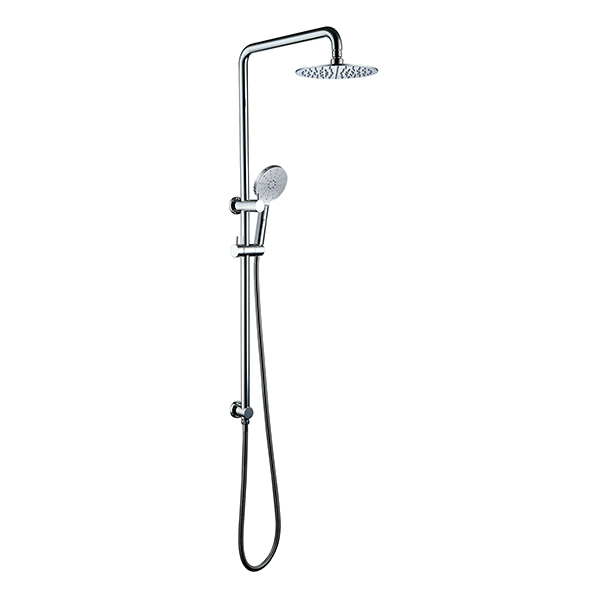
Exposed systems offer a highly practical alternative. Plumbers frequently call these shower pipe systems. The main mixing valve mounts directly to the outside of the finished wall. A visible, rigid riser pipe connects the controls vertically to the overhead spray.
This evaluation makes them ideal for quick retrofits. You can upgrade to a dual-head system easily in just an afternoon. You avoid tearing into existing waterproofed walls. The industrial, mechanical look also adds strong character to historical or transitional bathroom designs.
Best Practice: Always measure your ceiling height before purchasing an exposed system. The rigid riser pipe needs adequate vertical clearance above the wall-mounted valve. If your ceiling sits too low, the overhead spray will hit you in the forehead.
Beautiful fixtures fail instantly if your house lacks the necessary plumbing infrastructure. You must evaluate your home mechanics first before browsing catalogs.
We measure water pressure in Bar or PSI (Pounds per Square Inch). Standard fixed showerheads require at least 1.0 Bar (roughly 15 PSI) to function properly. Multi-function luxury setups demand much higher baseline pressure.
Body jets and massive rainfall canopies often require 2.0 to 3.0 Bar (30-45 PSI) to push water forcefully. Gravity-fed water systems in older properties usually fall short of these targets. The water merely trickles out. In these situations, you might need to install an electric booster pump to achieve satisfactory performance.
Hot water system compatibility matters just as much as raw pressure. Different boilers handle water delivery uniquely.
Combi-boilers: These systems heat water instantly and provide high-pressure delivery. They pair perfectly with modern thermostatic valves.
Unvented cylinders: These tanks store hot water under mains pressure. They deliver strong, balanced hot and cold flow, making them ideal for multi-outlet installations.
Gravity-fed systems: These rely on a cold water tank in the attic. They often suffer from unequal hot and cold pressure. You must select a valve rated specifically for low-pressure environments to avoid temperature fluctuations.
Pipe sizing dictates the total water volume reaching your fixtures. Upgrading to multi-outlet systems requires careful planning. If you run a large rainfall head and three body jets simultaneously, standard 1/2-inch supply lines will choke. You suffer from immediate flow starvation.
Upgrading the hidden supply lines to 3/4-inch prevents this issue. The larger diameter carries significantly more water volume per second, feeding thirsty multi-function setups adequately.
System Type | Required Minimum Pressure | Recommended Supply Pipe Size |
|---|---|---|
Single Fixed Head | 1.0 Bar (15 PSI) | 1/2-inch |
Dual Head (Fixed + Handheld) | 1.5 Bar (22 PSI) | 1/2-inch |
Multi-Jet (Head + Handheld + 3 Body Jets) | 2.5 - 3.0 Bar (35-45 PSI) | 3/4-inch |
Do not judge a fixture solely by its exterior shine. Material durability separates lifetime products from temporary fixes. Your selection here dictates how many years pass before you face another renovation.
Commercial-grade components use solid cast brass or heavy-duty stainless steel. We frequently see these robust materials in hotel shower fixtures. Solid brass resists internal corrosion perfectly and withstands decades of daily water pressure.
Conversely, residential-grade products often use ABS plastic. Manufacturers coat this plastic in metallic chrome. It looks identical out of the box. However, ABS plastic cracks under high heat and constant daily use. The threads strip easily during installation. Always check the item weight before buying. Heavier packaging usually indicates solid brass internals.
Finish resilience determines long-term visual beauty. Physical Vapor Deposition (PVD) finishes bond the color at a molecular level inside a vacuum chamber. PVD resists hard water scaling, chemical cleaners, and daily scratches perfectly.
Standard electroplating sits merely on the surface. It eventually flakes or chips away around the handles. PVD components cost more upfront but last significantly longer without tarnishing.
Regulatory compliance ensures physical safety and legal operation. Local plumbing codes dictate specific flow and anti-scald standards. You must check regional requirements before ordering overseas fixtures.
For instance, selecting a certified WaterMark shower set guarantees compliance in applicable regions like Australia. This certification protects your home insurance policies. It proves the product passed rigorous pressure testing, toxicity evaluations, and structural integrity checks.
Eco-certifications like WaterSense indicate the presence of flow-rate restrictors. These internal components restrict water usage effectively. Be careful not to exaggerate water-saving claims. Restrictors lower the gallon-per-minute (GPM) output. If your home already suffers from low baseline pressure, a heavy restrictor ruins the bathing experience entirely. You can sometimes remove restrictors, but doing so violates certain local eco-codes.
A reliable purchase requires aligning visible design elements with your hidden plumbing infrastructure. You cannot buy parts blindly based on aesthetics alone. Every valve, pipe, and nozzle must speak the same mechanical language. This tight alignment prevents behind-the-wall leaks and weak spray performance. Ensure your rough-in exactly matches your trim kit. Verify your home water pressure actively supports your chosen luxury features.
Take action before finalizing any online shopping cart. Consult your local plumber to confirm your exact water pressure limits. If you are not doing a full tear-out, check your existing in-wall valve brand carefully. Once you gather this crucial data, finalize your shortlist. You can then confidently purchase a complete shower set engineered to last for decades.
A: Yes, but only if you purchase a trim kit from the exact same brand as your existing rough-in valve. Cartridges and splines are proprietary. You cannot put a Kohler handle on a Moen valve. Verify your current brand before buying replacement trims.
A: Yes. A diverter valve directs water between the fixed head and the handheld unit. Some mixing valves feature an integrated diverter built into the main plate. Other complex setups require a separate, standalone transfer valve installed above the main handle.
A: The rough-in is the brass plumbing valve installed inside your wall. It mixes hot and cold water. Retailers frequently sell trim kits and rough-in valves separately. Always read the product description carefully to confirm the rough-in valve is included in your box.
A: Modern fixtures include factory-installed flow restrictors to meet government water-saving regulations (like WaterSense). These limit the flow to 1.8 or 2.5 gallons per minute. Your older fixture likely had no restrictor. Additionally, ensure your plumber fully opened the integral stops on the new valve.


