
- All
- Product Name
- Product Keyword
- Product Model
- Product Summary
- Product Description
- Multi Field Search
Views: 0 Author: Site Editor Publish Time: 2026-09-03 Origin: Site


Many homeowners face a frustrating renovation dilemma. They choose tapware based purely on visual aesthetics. They often ignore the vital structural disparities between kitchen and bathroom fixtures. This oversight causes daily frustration. Installing the wrong type of mixer leads to chronic splashing. You might find yourself entirely unable to wash large cookware. Incorrect installations can even void manufacturer warranties. This problem matters deeply because fixtures must match the room's physical demands.
A successful installation requires careful spatial planning. You must accurately align the fixture's spout reach, swivel capacity, and flow rate. These elements must fit the exact spatial constraints of your counter space. They also must support the daily utility of your sink. In this comprehensive guide, you will learn exactly how to match tapware to its intended environment. We will explore key geometric contrasts. We will examine critical water delivery mechanics. You will walk away holding a clear framework for choosing the right fixture every single time.
Kitchen mixers prioritize clearance and multi-directional reach (swivel/pull-out) for large vessels.
Basin mixers are engineered for low-clearance, stationary hand-washing with restricted water flow.
Swapping them interchangeably often creates ergonomic failures (excessive splashback or restricted access).
Always verify local plumbing compliance (e.g., WaterMark certification) and WELS water-efficiency ratings based on the room's specific utility.
The primary contrast between these two fixture categories lies in their physical geometry. Manufacturers design each tap to solve distinct spatial challenges. Understanding the sink faucet difference begins by examining how water drops from the spout into the basin. We must evaluate three specific ergonomic metrics: height, reach, and mobility.
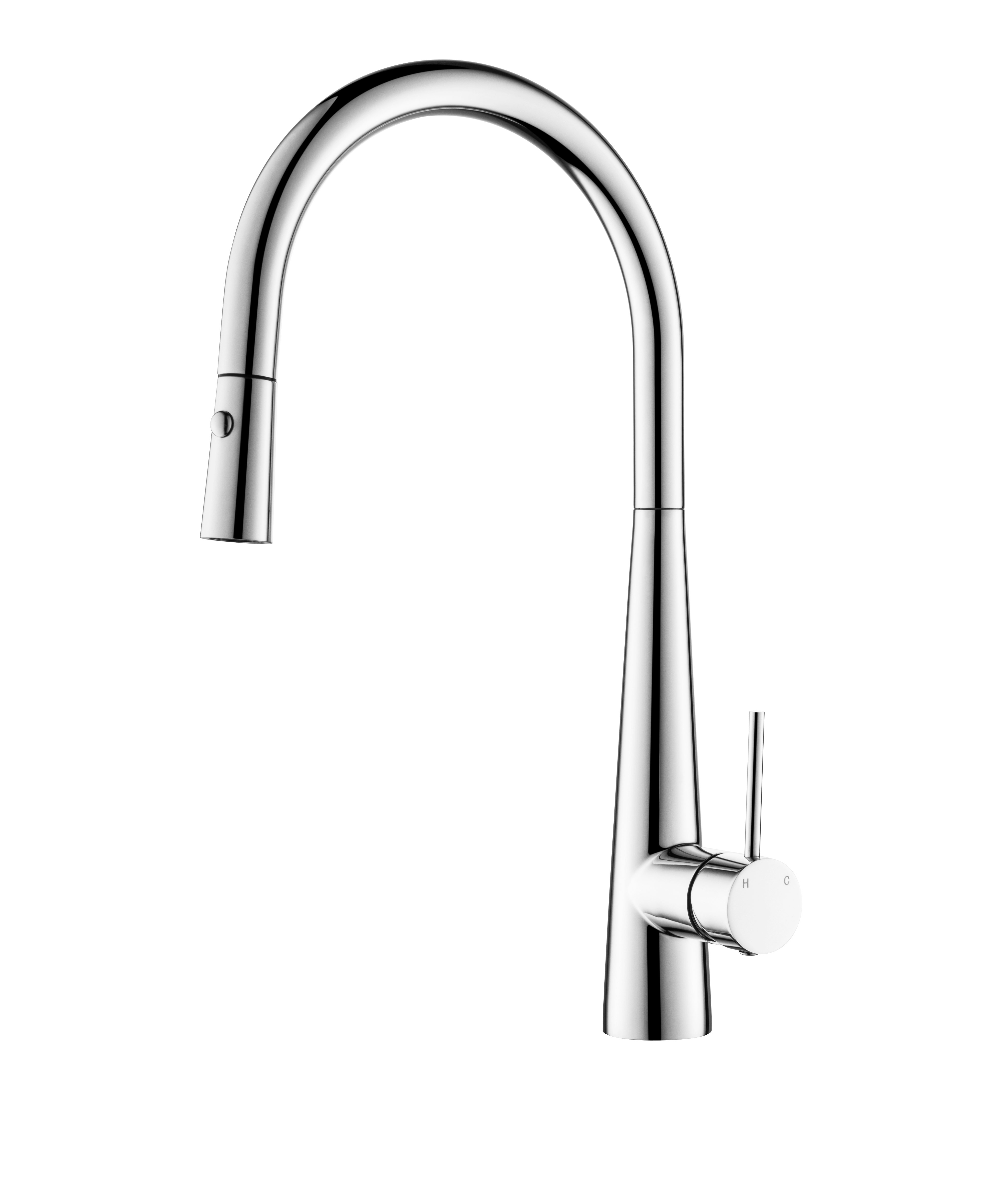
Kitchen environments demand significant vertical clearance. High-arc designs, often called gooseneck spouts, serve as the industry standard here. A high-arc kitchen sink mixer provides ample room underneath. You can easily maneuver tall stockpots, wide frying pans, and large flower vases. The elevated spout drops water from a higher point.
Bathroom environments require the opposite approach. Basin taps utilize low-profile designs. The spout sits much closer to the basin drain. This low clearance actively minimizes splashback during brief hand-washing tasks. A shallow vanity bowl simply cannot handle a high water drop. The only major exception involves tall basin mixers. Designers use these elongated fixtures exclusively for above-counter vessel sinks. They provide just enough clearance to reach over the raised basin rim.
Spout reach defines how far the fixture extends horizontally over the basin. A standard kitchen tap features an extended projection. The spout extends deeply into the center of a large kitchen bowl. This central placement ensures water hits the drain directly. It prevents you from bumping pots against the back wall of the sink.
Conversely, a bathroom basin faucet has a notably shorter projection. Bathroom basins are inherently shallower and narrower. A long spout would push the water stream too close to your torso. It would force you to wash your hands awkwardly near the front edge. The shorter reach keeps the water stream perfectly centered in a compact vanity.
Mobility represents a definitive functional boundary between the two types. Kitchen fixtures require extensive mobility. They generally feature a 180° to 360° swivel radius. You need this rotation to service double-bowl sinks effectively. Swiveling allows full access to all sink corners for thorough cleaning. You can push the spout entirely out of the way when loading heavy dishes.
A standard bathroom tap remains universally fixed in place. The spout does not rotate left or right. Manufacturers restrict this movement intentionally. A fixed spout prevents water from spilling over the narrow edges of a small vanity sink. If a bathroom tap could swivel, a simple bump would send water pouring onto your dry countertop.
Feature | Kitchen Mixer Standard | Basin Mixer Standard |
|---|---|---|
Spout Arc | High-arc (Gooseneck) | Low-profile (Standard) |
Projection | Long (Hits center of large bowls) | Short (Tailored for narrow vanities) |
Mobility | 180° - 360° Swivel | Fixed / Stationary |
Primary Goal | Maximum vertical and horizontal clearance | Splash reduction and controlled flow |
Visual geometry only tells half the story. The internal fluid mechanics dictate how the fixture actually performs daily. While they look somewhat similar outside, they deliver water using very different pressure strategies. You must understand flow ratings to ensure practical utility in your space.
Water efficiency labeling (WELS) reveals the true intent behind a fixture's design. Kitchen taps walk a fine line between conservation and utility. They must remain water-efficient to meet modern building codes. However, they also face the practical need to fill high-volume pots quickly. If a kitchen tap restricts flow too aggressively, filling a large pasta pot becomes a frustratingly slow task. Therefore, kitchen models often allow a slightly higher liters-per-minute (LPM) output compared to bathroom models.
Bathroom fixtures face different operational demands. They utilize highly aggressive flow restrictors. A bathroom tap rarely fills large vessels. You mainly use it for brief tasks like washing hands, washing your face, or brushing teeth. Manufacturers install specific aerators to create a soft, frothy water flow. The aerator injects air into the water stream. This thickens the stream visually while drastically cutting actual water volume. The softer flow saves water during continuous tasks. It also plays a vital role in preventing splashback against shallow ceramic bowls.
Despite their different outputs, both fixture types share similar internal valve technology. Most modern tapware relies on 35mm to 40mm ceramic disc cartridges. These internal cartridges handle the mixing of hot and cold water. They control the temperature and the baseline volume.
Since the internal cartridge sizing remains nearly identical, the actual flow modification happens at the spout tip. The primary pressure delivery changes right as the water exits the tap. By swapping aerators and restricting the internal spout channels, manufacturers dictate the final water behavior. The underlying engine remains similar, but the exhaust systems differ completely.
Common Mistake: Homeowners often remove aerators from bathroom taps hoping to increase pressure. This ruins the frothy flow. It usually results in aggressive splashing that soaks your clothing.
Many consumers try to bend the rules. They find a beautiful tap on sale and decide to install it in the wrong room. Can you use them interchangeably? Technically, yes. Practically, it often ends in functional disaster. Swapping these fixtures creates distinct implementation risks that ruin your daily routine.
Imagine installing a tall, swiveling kitchen tap on a standard bathroom vanity. The primary risk involves severe splashback. The high water drop accelerates the stream before it hits the shallow basin. Water deflects forcefully off the ceramic surface. It covers your mirrors, walls, and countertops in a fine mist.
Furthermore, the swivel feature becomes a distinct liability. A standard basin mixer tap stays rigidly forward. A kitchen tap rotates easily. If a child bumps the spout sideways while the water runs, the stream misses the bowl entirely. This quickly causes severe water damage to wooden vanity countertops and bathroom floors.
Installing a low-profile bathroom tap in a primary kitchen or laundry room creates immediate bottlenecks. The main risk is zero clearance. You will face an immediate inability to fit standard cookware underneath the spout. Washing a large roasting pan becomes physically impossible.
The fixed spout adds another layer of frustration. Large kitchen sinks require targeted rinsing. A fixed spout makes rinsing the outer corners of a large double sink completely impossible. You will find yourself constantly scooping water with cups to clean the basin edges. This setup entirely defeats the purpose of a functional kitchen workspace.
Some spaces blur the lines between kitchen and bathroom utility. Bar sinks, butler's pantries, and small kitchen island prep sinks fall into this grey area. A massive gooseneck tap overpowers a tiny bar sink. A fixed bathroom tap lacks the reach needed for rinsing glasses.
In these specific zones, hybrid models act as the ideal middle ground. Smaller prep-sink mixers combine a medium-arc height with a shorter projection. They usually retain the swivel feature. These specialized hybrid taps provide enough clearance for washing cocktail shakers without visually dominating the smaller counter space.
Choosing tapware involves strict legal and safety considerations. You cannot simply install any generic fixture you find online. Understanding regulatory compliance protects your home, your health, and your insurance policies.
In regions like Australia, plumbing fixtures must meet strict testing standards. Looking for a certified WaterMark mixer tap is absolutely non-negotiable for both categories. This certification guarantees specific performance and safety baselines.
Material Safety: Certified taps guarantee the use of safe materials, such as lead-free brass. This prevents heavy metals from leaching into your drinking water.
Pressure Tolerance: Certified fixtures undergo rigorous pressure testing. They will not easily burst or leak under standard municipal water pressure fluctuations.
Internal Durability: The standard ensures the ceramic cartridges can withstand thousands of daily operational cycles without failing.
Installing fixtures incorrectly carries hidden financial risks. You risk voiding your warranty by using a fixture outside its manufacturer-specified environment. If a bathroom tap fails prematurely because it was subjected to continuous, high-temperature commercial kitchen use, the manufacturer will reject the claim.
Additionally, licensed plumbers strictly follow compliance rules. A reputable plumber may flatly refuse to install or certify a bathroom fixture in a high-demand kitchen setup. They protect their own licenses by ensuring every installation meets local building codes and intended utility guidelines.
The main reason people attempt interchangeable installations stems from the installation footprint. Both categories generally require a standard 35mm cut-out hole. Whether you buy a massive pull-out kitchen tap or a tiny vanity tap, the brass threaded mount usually measures exactly the same.
This identical footprint makes them physically interchangeable on the benchtop. You can drop either tap into the exact same counter hole. However, physical fit does not equal functional compatibility. Just because it fits the hole does not mean it fits the room's workflow.
You now understand the structural, mechanical, and legal differences. The final step involves applying this knowledge to your specific renovation project. Use this logical sequence to narrow down your options and finalize your fixture decision successfully.
Never buy a tap without measuring your exact basin first. You must calculate the drop distance to avoid excessive splashing. Follow a simple rule of thumb: the deeper the sink bowl, the higher the spout can safely sit.
Measure the total depth of your sink basin.
Measure the distance from the tap mounting hole to the sink drain.
Check the manufacturer's specification sheet for the tap's "spout height" and "spout reach."
Ensure the water stream will hit slightly behind the main drain hole, not directly on the steep slope of the basin wall.
Boil your final choice down to pure daily utility. Do not let aesthetic trends override basic function. Ask yourself what happens at this sink 90% of the time.
If the primary task involves high-volume filling, aggressive rinsing, or cleaning large items, you need a kitchen-grade fixture. If the primary task involves brief hand-washing, face-washing, or teeth brushing, you need a bathroom-grade fixture. Let the specific chore dictate the necessary flow rate and clearance height.
Finally, evaluate the need for specialized features. A kitchen mixer tap often requires advanced functionality. You might need pull-out spray heads for cleaning corners. You might want magnetic docking to keep the spray head secure over time. Kitchens also see heavy impacts from pots and pans. Therefore, you should prioritize highly durable finishes. Physical Vapor Deposition (PVD) coatings resist scratching much better than traditional finishes in high-traffic kitchens.
Bathrooms see lighter physical impacts. You rarely bang heavy metal pots against a bathroom tap. Therefore, standard electroplating finishes usually provide plenty of durability for vanity settings. You can safely focus more on color matching and elegant silhouettes for bathroom designs.
Choosing the right tapware goes far beyond picking a pretty shape. While kitchen and bathroom taps look quite similar externally and share identical internal valve technology, their geometric layouts and flow dynamics differ completely. These precise differences dictate their proper placement in your home. A high-arc, swiveling spout perfectly services a busy culinary space. A low-profile, fixed spout elegantly manages splashback in a compact vanity.
Your actionable next step is simple. Grab a tape measure. Carefully measure your current sink basin depth and overhead cabinet clearance. Assess exactly how you use the sink daily. Once you define your physical constraints and your primary tasks, you can confidently shortlist models that guarantee long-term ergonomic success.
A: Yes. Both types typically use standard flexible braided hoses. These hoses usually feature a ½ inch BSP female thread to connect to your wall isolation valves. The internal mounting hardware also universally fits a standard 35mm benchtop hole, making the under-counter plumbing process nearly identical for both categories.
A: It is highly discouraged. While a tall basin mixer offers some vertical clearance, it completely lacks the necessary swivel function. The fixed spout limits your reach. Its shorter projection will also make rinsing large kitchen sinks difficult, forcing you to wash dishes uncomfortably close to the back edge.
A: Generally, yes. WELS ratings differ based on intended utility. Kitchen taps allow slightly higher flow rates (often 7 to 9 liters per minute) to ensure you can fill large pots efficiently. Basin taps use aggressive aerators to restrict flow (often 4 to 5 liters per minute) to prevent splashing and save water.
A: The plumbing industry standard for the benchtop cut-out hole is 35mm. Both kitchen and bathroom single-lever mixers require this identical hole size. This standard allows you to easily upgrade or replace fixtures in the future without needing to drill new holes in your stone or laminate countertops.


