
- All
- Product Name
- Product Keyword
- Product Model
- Product Summary
- Product Description
- Multi Field Search
Views: 0 Author: Site Editor Publish Time: 2026-08-30 Origin: Site


Upgrading a shower system often stalls at the plumbing hardware level. Specifically, choosing the right valve configuration to support the desired showerheads can halt a renovation project. Selecting between a 1-way and 2-way system isn't just an aesthetic choice. It dictates behind-the-wall plumbing requirements, water pressure dynamics, and overall renovation costs. Many homeowners purchase beautiful external fixtures only to realize their internal plumbing cannot support them.
You need a reliable system for your daily routine. A mismatch between your valve and your showerhead layout leads to poor water flow or expensive tear-outs. This guide breaks down the technical and practical differences between 1-way and 2-way shower setups. We will help you select the exact hardware needed for your bathroom design. By understanding these mechanisms, you can coordinate your fixture choices effortlessly, avoiding costly retrofitting errors.
1-Way Systems: Ideal for single-outlet setups (e.g., a standalone fixed showerhead). Lower installation complexity and predictable water pressure.
2-Way Systems: Required for dual-outlet setups (e.g., an overhead rain shower plus a handheld wand). Requires a specific diverter mechanism to toggle or share water flow.
Installation Reality: Upgrading from a 1-way to a 2-way system typically requires opening the wall to change the rough-in valve.
Compliance Matters: Always verify that your chosen bathroom shower mixer carries regional certifications (e.g., a WaterMark shower valve) to ensure durability and prevent voiding home insurance.
Before planning your new bathroom layout, you must understand the hardware working behind the tile. Plumbers categorize shower controls into two distinct functions. A standard mixer blends hot and cold water supplies to reach your desired temperature. It also controls the overall water volume. Conversely, a shower diverter valve acts as a directional switch. It takes that perfectly mixed water and routes it to specific outlets, like a rain head or a tub spout.
Many consumers face a common dilemma during the purchasing phase. They select their ideal trim kits—the visible handles and faceplates—without mapping out their water outlets first. You must finalize your shower fixture layout before purchasing the rough-in valve. The rough-in valve is the heavy brass body installed inside the wall. If you want multiple showerheads, your rough-in valve must physically feature multiple output ports.
Understanding hardware anatomy prevents installation delays. The rough-in valve functions as the engine of your shower. The trim kit acts as the steering wheel. These components must match perfectly. A shower mixer diverter combines both temperature control and water routing into one integrated behind-the-wall unit. You cannot simply attach a dual-function trim to a single-function rough-in valve. Planning this hardware relationship early ensures a smooth renovation.
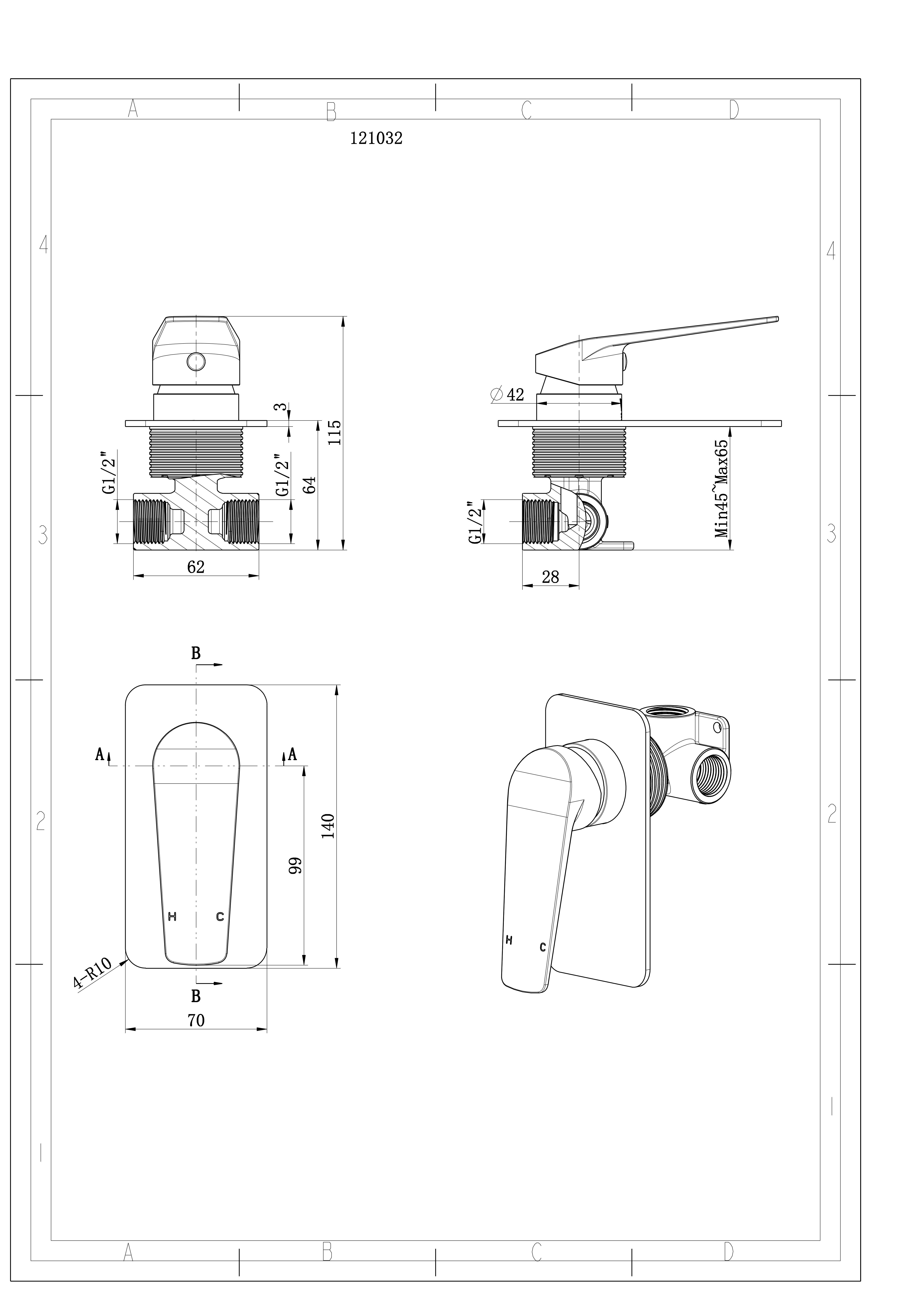
A 1-way configuration represents the most straightforward plumbing approach. It mixes hot and cold water and sends it directly to one single fixture. The internal cartridge opens the flow, allowing water to travel up a single pipe to your chosen showerhead.
These setups serve specific environments perfectly. We highly recommend them for guest bathrooms, minimalist designs, or budget-conscious renovations. If you only desire a standard fixed showerhead, a 1-way system provides everything you need without overcomplicating the plumbing layout.
The primary advantage lies in reliability. A 1-way system has the lowest failure rate and offers the cheapest installation process. Fewer internal moving parts mean fewer opportunities for leaks. However, this simplicity brings limitations. It offers zero flexibility for future fixture additions. If you ever want to add a handheld wand later, you must tear into the drywall to replace the entire valve body.
A dual-outlet system elevates the daily bathing routine. A 2 way shower mixer mixes the water temperature and utilizes a built-in diverter switch to route the flow. You can direct water to Outlet A, Outlet B, or sometimes both simultaneously, depending on the specific cartridge design.
This configuration shines in primary ensuites. Modern master bathrooms typically feature a fixed overhead rain shower paired with a secondary handheld wand. The handheld component proves essential for cleaning the shower enclosure, washing pets, or providing accessible bathing options.
While this setup maximizes utility and creates a spa-like experience, it requires careful planning. Running two outlets simultaneously splits your available water pressure. You must ensure your household plumbing can support the increased demand. Standard half-inch supply lines might struggle to feed two high-flow fixtures at once.
Here is a quick comparison table to help you evaluate both options:
Feature | 1-Way System | 2-Way System |
|---|---|---|
Number of Outlets | One (e.g., fixed head only) | Two (e.g., fixed head + handheld) |
Internal Mechanism | Single mixing cartridge | Mixing cartridge + diverter cartridge |
Installation Complexity | Low (standard plumbing) | Medium (requires multi-port rough-in) |
Future Flexibility | None (without renovation) | High (allows varied shower experiences) |
You must evaluate how a multi-outlet diverter impacts your flow rate, usually measured in Gallons Per Minute (GPM) or Liters per Minute (L/min). Many buyers forget this crucial metric. When you use a shared-flow diverter to run two fixtures simultaneously, the total available water splits between them. If your main valve delivers 2.5 GPM, running an overhead shower and a body wand at the same time gives each fixture roughly 1.25 GPM.
This reality often leads to disappointing, weak showers. To counter this, consider installing a high-flow valve. You might also need your plumber to upgrade your supply pipes from half-inch to three-quarter-inch lines.
Chart: Estimated Flow Rate Distribution (Simultaneous Use)
System Max Flow Rate | Flow at Outlet A (Shared) | Flow at Outlet B (Shared) | User Experience |
|---|---|---|---|
2.0 GPM | 1.0 GPM | 1.0 GPM | Weak pressure, poor rinsing |
2.5 GPM (Standard) | 1.25 GPM | 1.25 GPM | Adequate for daily use |
4.0+ GPM (High-Flow) | 2.0 GPM | 2.0 GPM | Excellent, spa-like pressure |
Your hardware's physical footprint heavily influences your bathroom's final aesthetic. You generally have two structural choices:
Concealed Systems: A concealed shower diverter hides the bulky brass valve inside the wall cavity. You only see the sleek control handles and the showerheads. This provides a highly modern, clean appearance. However, deep-wall installation makes future cartridge repairs slightly more challenging.
Exposed Systems: These feature a rigid exterior riser pipe and an external mixing bar. They mount directly onto the finished tile. They look bulkier and often suit industrial or vintage designs. They offer significantly easier retrofitting because plumbers do not need to open the wall to install them.
Never compromise on the core materials of your hidden plumbing. Always demand solid brass bodies and ceramic disc cartridges. Ceramic discs withstand hard water scale far better than older rubber washers, ensuring smooth handle operation for years. Furthermore, compliance stands as a non-negotiable requirement. Ensure your fixture carries proper certifications. A certified WaterMark shower valve guarantees the product meets strict testing standards for lead-free composition and pressure endurance. Installing non-compliant, unbranded hardware can void your home insurance policy if a hidden leak causes structural water damage.
Many consumers fall into the retrofitting trap. They believe upgrading from a single showerhead to a dual system involves a simple surface-level DIY job. They assume they can just buy a new 2-way handle and screw it on. This represents a massive misconception. The in-wall rough-in valve must physically possess two distinct outlet ports to route water to two fixtures. Upgrading typically requires breaking tile, cutting drywall, and soldering new copper pipes.
The plumbing industry operates on proprietary connections. Rough-in valves and exterior trims are almost never cross-compatible across different brands. If you have a Delta rough-in valve installed in your wall, you must purchase a Delta trim kit to fit over it. The splines, cartridge shapes, and screw hole alignments vary wildly between manufacturers. Always verify your existing valve brand before purchasing upgrade kits.
Even the best hardware requires occasional maintenance. Diverter valves experience specific wear-and-tear patterns.
Best Practice: Install valves featuring integrated service stops. These small screws allow you to shut off water directly at the shower valve rather than turning off the entire house supply during repairs.
Common Mistake: Ignoring hard water buildup. Mineral scale can prevent the diverter gate from closing completely.
Troubleshooting: If your overhead shower drips continuously while you use the handheld wand, your diverter cartridge likely has a worn internal O-ring. Fortunately, easily accessible replacement cartridges mitigate this risk. You simply remove the handle, pull out the old cartridge, and slide a new one in.
Your current bathroom condition dictates your best path forward. If you plan to keep your existing tile and waterproof membrane intact, you must match your current valve configuration. Changing a 1-way to a 2-way system without removing tiles is nearly impossible unless you switch to an exposed shower column. Conversely, if you are gutting the bathroom down to the studs, always upgrade to a 2-way rough-in valve. Even if you only install one showerhead initially, capping the second port leaves room for future upgrades.
Factor in everyone who uses the shower space. A standard fixed showerhead serves able-bodied adults perfectly. However, families experience different realities. Handheld wands require a 2-way system, and they prove critical for daily tasks. You need them for washing small children, rinsing pets, or assisting users with limited mobility. A versatile setup accommodates aging-in-place principles, making the home safer and more practical for all generations.
When planning your purchases, allocate your funds strategically. Direct more of your budget toward the concealed rough-in valve rather than overspending purely on an aesthetic trim. The brass body acts as the engine of your daily routine. A high-quality, heavily certified bathroom shower mixer prevents catastrophic in-wall leaks. You can always swap a scratched handle a few years later, but replacing a cheap, cracked valve requires thousands of dollars in demolition and tile repair.
The choice between a 1-way and 2-way shower system ultimately boils down to how you interact with your shower and your willingness to open up bathroom walls. A single-outlet system provides straightforward reliability, while a dual-outlet diverter delivers unmatched versatility and a premium bathing experience. We recommend choosing a 1-way setup if simplicity and strict budget limits define your project. However, opt for a 2-way diverter system to meet modern primary bathroom standards and future-proof your home.
Do not let hardware confusion delay your renovation. Map out your ideal fixtures today, prioritize heavily certified brass rough-in valves, and consult your licensed plumber to verify your home's water pressure capabilities. Browse compliant, high-flow diverter valves now to build the shower experience you deserve.
A: Generally, no. Traditional concealed setups require replacing the in-wall valve, which means cutting through tile. However, you can bypass this by using an external shower column or an exposed rail system. These attach directly to your existing single water outlet, providing both a fixed head and a handheld wand on the surface.
A: A 2-way diverter controls two distinct water features, usually an overhead showerhead and a handheld wand. A 3-way diverter controls three separate features. For example, it can route water to a rain head, a handheld wand, and a set of body jets or a tub spout, offering more complex shower experiences.
A: When water flows from both heads simultaneously against your settings, it indicates a compromised seal. This typically results from a worn rubber O-ring, heavy mineral buildup blocking the internal gate, or a failing diverter cartridge. Replacing the internal cartridge usually resolves the issue quickly without needing to replace the entire brass valve.
A: Yes. Concealed valves feature a specific mounting depth. They include a plastic "plaster guard" with minimum and maximum depth markers to ensure the wall is deep enough to house the brass body. If your wall framing is too shallow, the valve will protrude, making it impossible to install the decorative trim plate properly.


