
- All
- Product Name
- Product Keyword
- Product Model
- Product Summary
- Product Description
- Multi Field Search
Views: 0 Author: Site Editor Publish Time: 2026-07-24 Origin: Site


Selecting the right kitchen fixture requires more than matching a color palette. You need a reliable setup balancing mechanical strength and material longevity. The pull-out mechanism introduces complex moving parts, daily friction, and constant physical stress. Over time, the core base metal of your tap body strictly dictates its true structural integrity. If you choose poorly, constant hose retraction can cause internal leaks, micro-cracks, or outright mechanical failure. This often leads to disruptive kitchen downtime.
This guide evaluates the two predominant industry-standard materials for any pull out kitchen mixer: 304 Stainless Steel (304SS) and Solid Brass. We strip away generic marketing claims to examine their raw durability and strict compliance profiles. You will learn how to identify authentic metals, avoid surface-level illusions, and pick the perfect fixture for your specific space. By the end, you will know exactly which material aligns perfectly with your daily hygiene demands and long-term design goals.
Application Over Hype: 304SS offers unmatched, inherently lead-free corrosion resistance ideal for high-use, utilitarian kitchens, while solid brass provides superior acoustic dampening and premium aesthetic versatility.
Compliance is Non-Negotiable: A solid brass kitchen faucet must be explicitly verified as a lead free kitchen tap under current plumbing codes, whereas 304SS naturally bypasses this risk.
The Weight Test Fails: Relying purely on product weight to determine quality is outdated; evaluate the cartridge, hose material (nylon vs. braided metal), and certification (e.g., a verified WaterMark kitchen mixer) instead.
Finish dictates Maintenance: Brass requires advanced PVD (Physical Vapor Deposition) or electroplating to prevent tarnishing, whereas 304SS relies on its natural composition to resist rust.
A kitchen tap endures severe daily punishment. You grab the handle repeatedly. You extend the hose to rinse large pots. You snap the spout back into place. This constant movement creates significant mechanical stress. Hot water flows through the internal channels, followed quickly by freezing cold water. This rapid temperature change causes thermal expansion and contraction. The core base material must handle this thermal shock seamlessly. It must anchor the moving spout securely. If the metal is weak, you will experience inevitable structural degradation over time.
The mechanical stress factor cannot be overstated when analyzing a pull out sink mixer. Internal friction wears down inferior metals quickly. The constant back-and-forth motion places sheer force on the main body. High-quality base materials resist this daily tension without yielding. They prevent the internal waterways from warping under pressure. When the base remains rigid, the internal ceramic cartridges maintain their watertight seals much longer.
Premature failure of a kitchen tap rarely involves just the tap itself. The subsequent fallout often proves expensive and frustrating. A cracked base can unleash slow, hidden leaks into your cabinetry below. Water damage destroys expensive wooden shelves and flooring. You must also consider emergency plumber call-out fees. The workflow disruption in your kitchen adds unnecessary daily stress. Investing in a robust core material mitigates these secondary disasters entirely.
Consumers frequently fall victim to the finish versus base illusion. Manufacturers often mask inferior zinc alloys with shiny chrome plating. These exterior surfaces look heavy and premium initially. However, the cheap core degrades rapidly from the inside out. Once the plating chips, the underlying zinc crumbles quickly. Evaluating pure 304SS and solid brass ensures you compare true, commercial-grade substrates. We must look past the shiny exterior to assess the real engineering inside.
Always request the exact material specification sheet before purchasing. Do not accept vague terms like "stainless look" or "brass finish." You must verify the actual elemental composition of the fixture body. Focus heavily on the moving joint where the spout detaches. This area takes the most abuse and requires the strongest metal reinforcement.
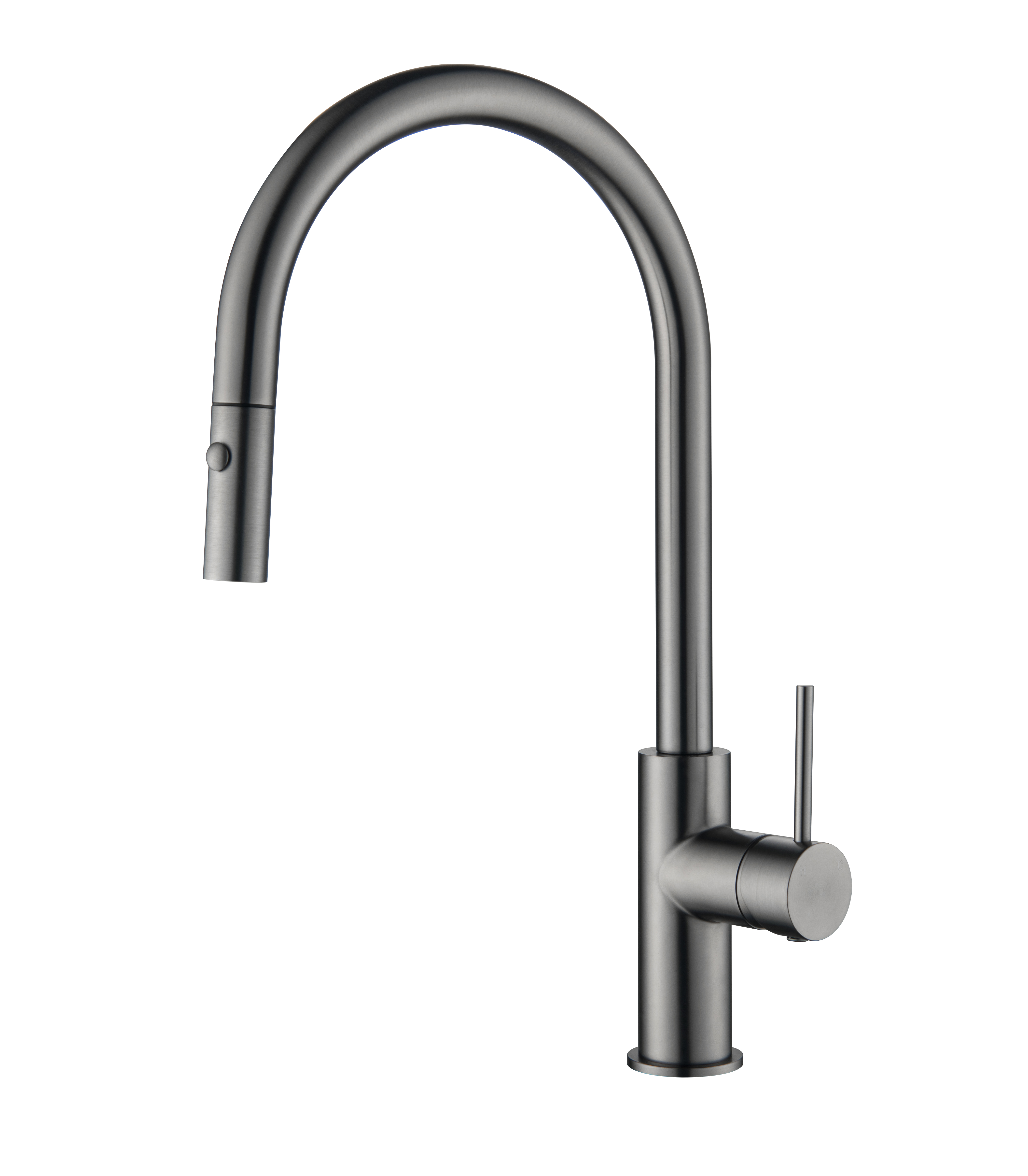
The engineering behind 304 stainless steel relies on brilliant material chemistry. It contains 18% chromium and 8% nickel. This specific blend creates a remarkable self-healing oxide layer on the surface. When oxygen hits the steel, it forms a microscopic protective barrier. If you scratch the surface, this barrier immediately reforms itself. It actively resists aggressive corrosion without needing any external chemical coatings.
This natural composition offers a massive health and compliance advantage. The alloy is inherently lead-free from the moment it leaves the foundry. You do not need to worry about heavy metal leaching into your drinking water. Choosing a genuine 304 stainless steel kitchen mixer provides absolute peace of mind. It vastly simplifies regulatory compliance checks for regional plumbing codes. The material naturally meets strict global toxicity standards by default.
However, we must evaluate its practical durability realities objectively. Like any material, it carries specific strengths and functional weaknesses in a busy kitchen.
Pros: It is practically impervious to peeling or chipping. The visible finish is simply the raw metal itself polished to a shine. It heavily resists acidic food splatters like lemon juice or vinegar. It withstands harsh chemical cleaners without degrading the core body.
Cons: The surface remains susceptible to visible micro-scratching. If you clean it with harsh abrasive pads, you will dull the finish. It tends to show hard water stains and oily fingerprints more readily than brushed brass equivalents.
The ideal use case for 304SS revolves around heavy functionality. It suits high-traffic environments perfectly. Professional kitchens, large family homes, and heavy culinary workspaces benefit immensely from its ruggedness. It also complements sleek, minimalist design aesthetics beautifully. Buyers who prioritize strict functional hygiene over trend-driven colors should default to this dependable metal.
Never clean stainless steel fixtures with standard steel wool. The wool leaves behind microscopic iron particles on the tap surface. These stray iron particles will rust quickly when exposed to water. You will mistakenly think the tap itself is rusting. Always use microfiber cloths and non-abrasive cleaners to maintain the protective chromium layer.
Solid brass stands as a historic pillar of premium plumbing engineering. Manufacturers form it from a precise copper and zinc alloy. This specific mixture offers superior malleability during the raw manufacturing process. Engineers can cast much tighter tolerances inside the internal waterways. They achieve smoother, more intricate curves within the main tap body. This precise casting reduces internal water turbulence and minimizes pressure drop.
A high-quality brass kitchen faucet offers incredible aesthetic flexibility. It serves as an excellent base for complex surface treatments. Manufacturers apply matte black or brushed gold finishes via advanced PVD (Physical Vapor Deposition) coating. PVD binds the color at a molecular level, preventing easy scratches. Alternatively, you can leave the brass completely untreated. This creates a beautiful "living finish" that develops a unique, localized patina over time.
Despite its premium status, implementation carries specific chemical risks. Traditional brass machining historically required trace amounts of lead. Lead made the raw metal easier to cut and shape on lathes. To ensure modern safety, buyers must remain highly vigilant. You must explicitly source a certified lead free kitchen tap. Premium manufacturers now utilize safe bismuth or silicon-brass alloys to replace the toxic lead.
You must also understand its heavy coating dependency. Unless you desire that raw, aging patina, the tap relies entirely on its factory coating. If a brand uses cheap electroplating instead of PVD, the finish will eventually chip. Once the protective coating breaches, the raw brass underneath will quickly oxidize and discolor aggressively.
The ideal use case for brass centers around design-led renovations. It fits perfectly into heritage homes or luxury custom builds. Designers often use it when executing the 80/20 mixed-metals design rule. It serves beautifully as a striking visual accent against neutral cabinetry. If your primary goal is heavy tactile feedback and unmatched visual warmth, solid brass remains the ultimate choice.
Comparing these two metals requires looking past initial aesthetics. We must analyze how they perform across decades of heavy use. Both materials excel in a residential environment, but they achieve longevity through very different mechanisms. Understanding these nuanced differences ensures you make a fully informed investment.
The relationship between upfront cost and ultimate lifespan differs significantly. 304SS generally offers a lower entry price point. It provides a very linear, highly predictable lifespan without major maintenance. High-quality, lead-free brass requires a noticeably higher upfront investment. In return, it offers heavier tactile feedback and highly advanced styling options. The extra cost pays for the complex PVD coatings and the specialized bismuth alloys required for safety.
Evaluation Criteria | 304 Stainless Steel (304SS) | Solid Brass (Lead-Free) |
|---|---|---|
Initial Investment | Highly accessible; excellent baseline value | Premium pricing; driven by complex alloys |
Acoustic Dampening | Moderate; water can sound slightly hollow | Superior; dense mass absorbs internal noise |
Corrosion Resistance | Exceptional; self-healing chromium oxide | Reliant entirely on PVD or electroplating quality |
Health Compliance | Inherently safe and lead-free by nature | Requires explicit third-party material verification |
Mechanical wear resistance remains excellent for both premium options. However, solid brass provides slightly better acoustic dampening properties. Brass carries a higher physical density than typical steel extrusions. Because of this density, the water sounds less hollow as it rushes through the internal chambers. This subtle acoustic difference contributes heavily to the subconscious premium feel of luxury kitchens.
Sourcing requires strict verification protocols regardless of your choice. You must demand absolute transparency from the manufacturer or retailer. Never accept marketing fluff like "brass finish" or "stainless look." Verify actual regulatory alignment before installation. Look for specific regional plumbing certifications etched into the product. A genuine WaterMark kitchen mixer guarantees the alloy passed standardized pressure checks. It also proves the internal components passed severe toxicity and heavy metal leaching tests.
Navigating the vast plumbing market feels overwhelming without a structured approach. Applying a systematic shortlisting logic eliminates poor choices quickly. You can confidently narrow down hundreds of options to the perfect fixture by following four distinct analytical steps.
Step 1: Define the Environment. Analyze your specific geographic and functional kitchen context. If your sink faces heavy utilitarian use, lean toward steel. If you live near coastal salt air, default strictly to 304SS. Airborne salt degrades plated brass finishes rapidly over time.
Step 2: Validate the Pull-Out Mechanism. The best external body proves useless if the internal retraction mechanism fails. Ensure the chosen material houses a premium ceramic disc cartridge (such as Sedal or Kerox brands). Look for a counterweighted, silent nylon hose. Nylon glides much smoother than abrasive braided metal hoses.
Step 3: Check Certifications. Request the exact metallurgical specification sheet from the supplier. Cross-reference the product SKU against local compliance databases. Look for active listings in regulatory registries like NSF/ANSI 61 or regional equivalents. This confirms the lead-free status of brass models definitively.
Step 4: Align with Cabinetry Hardware. Finalize your choice based on spatial aesthetics and lighting. Decide if the tap acts as the primary anchor metal or a secondary accent metal. Match the finish texture appropriately with your cabinet pulls and appliances.
Taking these steps ensures your investment performs flawlessly for decades. You eliminate the guesswork and rely strictly on proven engineering principles. Never compromise on the internal cartridge quality, regardless of which base metal you ultimately select.
The choice between 304SS and solid brass for a pull out kitchen mixer is not a debate of "good vs. bad." It is fundamentally a choice of "hygiene-first vs. design-first." 304SS delivers uncompromising, low-maintenance durability and immediate health compliance right out of the box. It shrugs off heavy abuse and harsh cleaners effortlessly.
Solid brass offers unmatched tactile quality and stunning aesthetic versatility. It brings undeniable warmth and acoustic superiority to luxury spaces. However, it demands that you rigorously verify its lead-free status and evaluate its exterior coating application carefully.
Prioritize 304SS for high-traffic, utilitarian durability.
Choose solid brass for architectural warmth and mixed-metal design schemes.
Always verify the internal ceramic cartridge quality before purchasing.
Demand explicit third-party toxicity certifications for any brass fixture.
Base your final decision on your actual willingness to maintain the tap over time. Consider the specific visual hierarchy of your kitchen space. By aligning the core metal with your daily lifestyle, you guarantee a flawless, long-lasting installation.
A: Historically, yes. Older manufacturing methods relied on lead for easier machining. Modern plumbing regulations now require strict limits. Always insist on explicitly labeled "lead-free" brass fixtures. Premium manufacturers utilize safe bismuth or silicon within the alloy to replace toxic lead completely.
A: It is highly rust-resistant, but not entirely rust-proof. Prolonged exposure to harsh chlorides, like heavy bleach, can damage it. Stray iron particles from steel wool pads can also compromise its protective chromium oxide layer. Proper cleaning with microfiber cloths prevents any rust formation.
A: 304SS generally handles heavy hard water scaling much better without degrading the underlying base metal. However, both materials will inevitably build up calcium deposits. You will still require regular descaling of the aerator and the pull-out nozzle to maintain proper water pressure.
A: It guarantees the tap has been independently tested for safety. The certification verifies safe operating pressures, material toxicity limits, and strict cross-contamination prevention. This remains absolutely critical for any physical fixture connected directly to your primary drinking water supply.


