
- All
- Product Name
- Product Keyword
- Product Model
- Product Summary
- Product Description
- Multi Field Search
Views: 0 Author: Site Editor Publish Time: 2026-05-12 Origin: Site


Is it a sink or a wash basin, or are they actually the same thing? The answer matters more than many people think, especially when describing fixtures, searching for products, or reading home advice. In this article, you will learn the practical difference, why the terms often get mixed up, and which word fits each situation better.
The fastest way to answer the question is to look at the room. In everyday home use, a sink is usually the fixture in the kitchen, laundry room, or utility area, while a wash basin is more often the fixture in the bathroom or powder room. That pattern is consistent because the two spaces are built around different routines. Kitchens and utility zones are designed for cleaning cookware, rinsing food, and handling messier jobs, so the word sink feels more natural there. Bathrooms, by contrast, are associated with handwashing, face washing, and grooming, which is why wash basin remains a familiar label in many contexts.
Typical room | Term people usually use | Main expectation |
Kitchen | Sink | Deeper, more work-focused fixture |
Laundry or utility room | Sink | Built for cleaning and heavier use |
Bathroom | Wash basin / bathroom sink | Used for personal washing and daily hygiene |
Powder room | Wash basin | Smaller fixture with a cleaner, more decorative look |
Room is the easiest clue, but purpose is the stronger one. A fixture earns its name from what people expect it to do every day. A kitchen sink is expected to handle bulkier, wetter, and often dirtier tasks. It needs enough depth and practical space for washing dishes, rinsing produce, filling pots, or cleaning larger items. A wash basin, on the other hand, is associated with lighter personal-use tasks such as washing hands, brushing teeth, or splashing water on the face. That difference in daily function shapes everything else, including size, depth, and overall design direction.
Even with these practical rules, there is still no perfectly fixed answer, because real language is messy. Many people use sink as a broad everyday word for almost any plumbed fixture with a faucet and drain. Others use wash basin only in bathroom contexts, or prefer basin as a shorter, more design-oriented term. Product pages, renovation articles, and regional English usage also blur the boundary, so readers may see the same bathroom fixture described in two different ways. That is why the question keeps coming back: the distinction is real, but it is not absolute.
A useful way to think about it is this:
● Use sink when the fixture is tied to kitchen or utility work.
● Use wash basin when the fixture is clearly bathroom-based and focused on personal washing.
● Expect overlap whenever people are speaking casually rather than naming fixtures precisely.
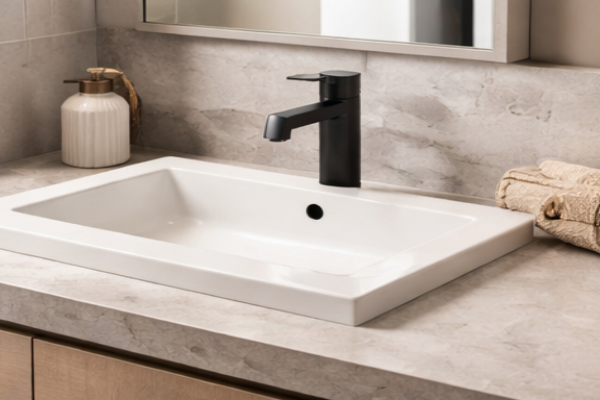
A wash basin is usually the easier of the two fixtures to recognize because most people already associate it with the bathroom. In practical terms, it is designed for short, repetitive personal-care tasks: washing hands, brushing teeth, rinsing a face, or doing a quick clean-up during the day. That purpose affects the way it looks and feels in a room. A wash basin is often more compact than a sink, with a shallower bowl and a shape that fits comfortably into a vanity area, a powder room, or a small bathroom wall. Readers do not need plumbing terminology to understand the difference; they can picture the fixture they lean over in the morning rather than the one they use to scrub cookware.
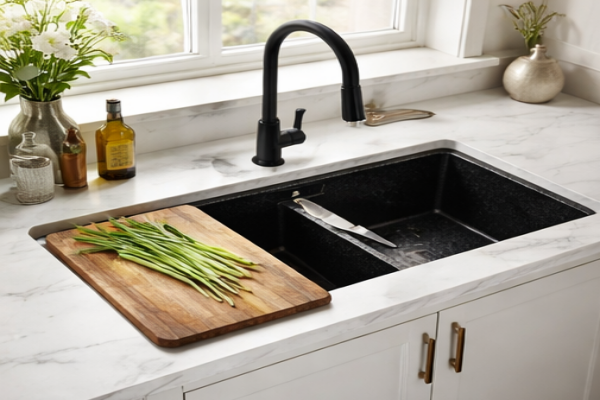
A sink, by contrast, is normally associated with heavier daily work. It is expected to hold more water, take more wear, and deal with larger or dirtier items without feeling cramped. That is why sinks are commonly described as deeper, roomier, and more durable in everyday use. Whether they are placed in kitchens, laundry rooms, or other utility areas, they are built around tasks that require more capacity and less delicacy. People reach for a sink when the job involves dishes, food prep, rinsing containers, or general household cleanup. That work-oriented purpose shapes the fixture more than style does.
Feature | Wash basin | Sink |
Usual setting | Bathroom or powder room | Kitchen, laundry, or utility area |
Typical depth | Shallower | Deeper |
Main use | Handwashing and personal hygiene | Cleaning, rinsing, and heavier household tasks |
Design priority | Compactness and visual fit | Capacity and practicality |
Everyday impression | Lighter-use fixture | Work-focused fixture |
At first glance, people often assume the difference is mostly visual: one looks more elegant, the other more practical. Style does matter, but appearance is not the real dividing line. The deeper difference is what each fixture is expected to do every day. A wash basin may look refined because it only needs to support lighter routines, while a sink often appears broader or deeper because it must handle volume, mess, and repeated use. In other words, design follows function. The shape, bowl depth, and surrounding layout all reflect how the fixture will be used over time. This is why two fixtures made from similar materials can still feel completely different in context.
This is where many readers get stuck: if a bathroom fixture is often called a bathroom sink, why call it a wash basin at all? The answer is that both labels may point to the same fixture, but they do not carry exactly the same emphasis. Bathroom sink is a broad, everyday term that feels familiar and easy. Wash basin is often the more specific label because it points more clearly to the fixture’s bathroom function and lighter-use purpose. In home articles, product descriptions, and design discussions, wash basin can sound more precise when the focus is on a bathroom unit rather than a general household sink. This overlap is one reason the confusion persists: people are often talking about the same object, but choosing different words depending on context, habit, or region.
One major reason people mix up sink and wash basin is that everyday conversation does not need the same level of precision as product naming. In normal speech, most people simply choose the word that feels most familiar, not the one that is technically narrower. If someone says “bathroom sink,” everyone understands the object immediately, even if a catalog or showroom might label a similar item as a wash basin. Outside renovation, interior design, or plumbing contexts, few speakers stop to separate the terms carefully.
This difference between casual language and product language also explains why online searches can feel inconsistent. A homeowner may type “small bathroom sink,” while a seller may organize similar products under “wash basins.” That does not always mean the fixture itself is different. More often, it means the language changes depending on whether the goal is quick communication or clearer classification.
Regional English adds another layer of confusion. In some varieties of English, especially American usage, sink often works as a broader everyday term and can refer to both kitchen and bathroom fixtures. In other varieties, particularly British and Commonwealth usage, wash basin or basin sounds more natural for bathrooms, while sink stays more closely tied to kitchens and utility spaces.
English usage pattern | What sounds more natural |
American English | “Sink” for kitchen and often bathroom fixtures |
British/Commonwealth English | “Sink” for kitchens, “wash basin” or “basin” for bathrooms |
When the fixture is in a bathroom, the safest practical choice is usually wash basin or bathroom sink, depending on context. In everyday conversation, both can work, but they do not always sound equally natural. Bathroom sink is simple, widely understood, and useful in casual speech. Wash basin is often more specific when the focus is on a bathroom fixture used for handwashing, face washing, and other personal-care routines.
For writing, clarity matters more than sounding overly technical. If you are describing a bathroom layout, “wash basin” can feel slightly more precise, especially in design-related or home-improvement content. If you are speaking casually or writing for a broad audience, “bathroom sink” may feel more natural. The key is to match the term to the situation rather than force one word into every sentence. For product searches, the same flexibility helps. Someone looking for a fixture for a vanity area may get better results by searching more than one phrase, because some listings use “wash basin,” while others group similar products under “bathroom sink.” That naming overlap is one reason readers often feel unsure about which term is “correct” in the first place.
In kitchen contexts, the answer is much more direct: call it a sink. This is the word most people expect, and it matches the fixture’s purpose. A kitchen fixture is generally deeper, more practical, and built for washing dishes, rinsing produce, or handling general household mess. Because the kitchen version is tied so strongly to cleaning work, “wash basin” usually sounds less natural there.
That simple contrast helps in both speech and writing. If you are describing a renovation, “kitchen sink” is the clearest phrase. If you are comparing rooms in a home, it is also easier for readers when the bathroom fixture is framed as a wash basin or bathroom sink, while the kitchen fixture remains just a sink. In other words, kitchen language tends to be more stable. There is far less everyday uncertainty around the kitchen term than around bathroom terminology, which is why most confusion starts only when people move from one room to the other.
Situation | Best term to use | Why it works |
Casual talk about a bathroom | Bathroom sink | Familiar and easy to understand |
Design or home-improvement writing about a bathroom | Wash basin | More specific to bathroom use |
Product search for a bathroom fixture | Wash basin / bathroom sink | Both terms may appear in listings |
Any normal kitchen context | Sink | Standard term for the room and task |
The easiest way to avoid confusion is to stop relying on a single word by itself. Instead of asking only whether something is called a sink or a wash basin, look at four practical clues: room, purpose, depth, and product category. These details usually tell you more than the label alone. A bathroom fixture meant for handwashing and grooming will often be described as a wash basin, even if some sellers call it a bathroom sink. A deeper, work-oriented fixture listed under kitchen or utility categories is almost always functioning as a sink, no matter how creative the product wording becomes.
A practical approach is to check the product page or description for context clues rather than fixating on terminology. Readers can reduce mistakes by paying attention to:
● the room the fixture is designed for
● the kind of daily tasks it is meant to handle
● whether the bowl is shallow and compact or deeper and more work-focused
● the category under which it is sold
That approach is more reliable than assuming every seller, writer, or homeowner uses the same vocabulary.
In daily use, a kitchen fixture is usually called a sink, while a bathroom fixture is more often called a wash basin. The terms can overlap, but location and function usually make the meaning clear. With reliable product quality and practical solutions, TRANSTAR Machinery Co., Ltd. helps customers choose fixtures that improve everyday use and long-term value.
A: Not exactly. A wash basin usually refers to a bathroom fixture, while a sink often refers to kitchen or utility use.
A: Use wash basin when describing a bathroom fixture for handwashing, face washing, or similar hygiene tasks.
A: In many cases, no. A wash basin and a bathroom sink can describe the same fixture, depending on context.
A: Check room use, bowl depth, and product type, because a wash basin is typically smaller and bathroom-focused.


