
- All
- Product Name
- Product Keyword
- Product Model
- Product Summary
- Product Description
- Multi Field Search
Views: 0 Author: Site Editor Publish Time: 2026-05-09 Origin: Site


Many people use wash basin and kitchen sink as if they mean the same thing, but they do not. Both use water and plumbing, yet they are made for different spaces and daily tasks. In this article, you will learn the real differences between them, where each one should be used, and how to choose the right option for your home.
At first glance, a wash basin and a kitchen sink can seem like variations of the same fixture. Both connect to plumbing, both hold running water, and both are used many times a day. The real difference, however, is not the name people casually use in conversation. It is the job each fixture is built to handle. A wash basin is designed for personal washing in a bathroom or powder room, while a kitchen sink is designed for cleaning tasks tied to cooking, dishes, and food preparation. Once that functional divide is clear, the differences in depth, material, drainage, and placement become much easier to understand.
A wash basin is intended for light, quick routines such as washing hands, rinsing the face, and brushing teeth. Because these tasks do not involve heavy cookware, food residue, or repeated impact, the fixture is typically smaller and shallower. In practical terms, that makes it easier to fit into compact bathroom layouts and more suitable for spaces where comfort, accessibility, and visual neatness matter as much as utility. Materials commonly associated with wash basins also reflect this lighter use, often prioritizing a clean finish and an appearance that fits the bathroom environment.
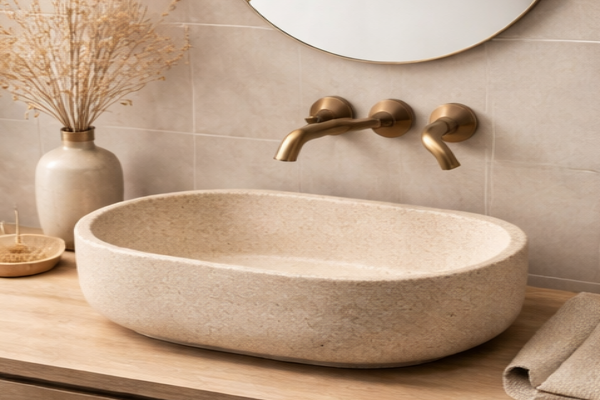
A kitchen sink is built for a more demanding workload. It needs to handle plates, pans, utensils, rinsed vegetables, greasy residue, and frequent daily cleaning. That is why it is normally larger, deeper, and made from more hard-wearing materials. In a busy kitchen, capacity matters because the sink must support soaking, rinsing, scrubbing, and prep-related tasks without making the workflow awkward or cramped. The fixture is therefore shaped by performance first, not by the lighter routines typical of a bathroom.
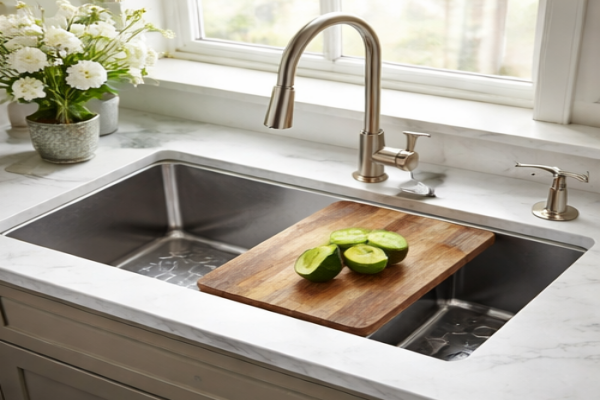
Fixture | Primary purpose | Typical room | Workload level |
Wash basin | Hand and face washing | Bathroom, powder room | Light |
Kitchen sink | Dishwashing, rinsing, food prep | Kitchen, utility area | Heavy |
This functional distinction is the starting point for every other comparison. It explains why one fixture is compact and bathroom-oriented while the other is deeper, tougher, and built for heavier household use.
The most important design differences between a washbasin and a kitchen sink come from the kind of work each fixture is expected to perform every day. A washbasin is created for short, low-impact routines in a bathroom, so the design usually prioritizes comfort, compact dimensions, and a finish that fits the room visually. A kitchen sink, by contrast, must support heavier, messier, and more repetitive use, which affects not only its overall size but also its construction, drainage setup, and working details. These structural differences are practical rather than decorative, because they influence how efficiently the fixture performs under daily use.
A washbasin is generally smaller and shallower because it only needs to accommodate handwashing, face washing, and similar personal care tasks. In most bathrooms, a compact bowl is enough to manage light water use without taking up more counter or floor space than necessary. This smaller format also makes the fixture easier to integrate into powder rooms, guest bathrooms, and narrow vanity layouts where every inch matters. The design aims to provide convenience and cleanliness without the extra capacity required for household cleaning jobs.
A kitchen sink needs a larger and deeper bowl because its daily workload is far more demanding. It must hold plates, pots, pans, utensils, colanders, and rinsed produce, sometimes all within the same meal-prep cycle. More depth helps reduce splashing during rinsing and scrubbing, while extra width makes it easier to handle bulky cookware without constant repositioning. In functional terms, the deeper profile is not simply a style choice; it supports a more efficient kitchen workflow and makes heavy cleaning tasks less awkward.
Because washbasins are used in lighter, more controlled settings, they are often made from materials that balance hygiene with appearance. Ceramic and porcelain remain common because they are smooth, easy to clean, and well suited to bathroom interiors. Glass and stone are also used when visual style is a stronger consideration, especially in spaces where the fixture contributes to the room’s decorative character. These materials perform well in bathrooms because they are not expected to absorb the same level of heat, impact, or abrasive use seen in a kitchen.
Kitchen sinks are built around durability first. Materials such as stainless steel, granite composite, and fireclay are widely used because they can better tolerate repeated contact with cookware, food residue, hot water, and cleaning products. They are also better suited to resisting scratches, stains, and long-term wear from daily household use.
Design element | Washbasin | Kitchen sink |
Typical bowl profile | Smaller and shallower | Wider and deeper |
Common materials | Ceramic, porcelain, glass, stone | Stainless steel, granite composite, fireclay |
Design priority | Hygiene, compact fit, appearance | Durability, capacity, heavy-use performance |
Drainage design also reflects the difference in workload. A washbasin typically handles lighter water flow from quick personal routines, so its drainage system is built for lower-volume use. Bathroom fixtures also commonly include an overflow opening, which helps reduce the risk of water spilling over if the basin is filled or the faucet is left running briefly. This feature suits the slower, smaller-scale water use common in bathrooms.
A kitchen sink usually needs stronger drainage capacity because it deals with larger volumes of water, food particles, and more frequent rinsing. Its working details are often shaped by utility, including wider drain openings and sink layouts designed to make washing and prep easier in everyday kitchen use.
People sometimes assume a wash basin and a kitchen sink can substitute for one another because both are plumbing fixtures with a bowl, faucet, and drain. In practice, that swap rarely works well. The issue is not only appearance, but also daily performance. Each fixture is shaped by the room it serves and by the type of work it is expected to handle, so using one in place of the other usually creates practical limitations rather than flexibility.
A wash basin is usually too shallow and compact for the demands of a kitchen. Everyday kitchen tasks involve plates, pans, utensils, produce, and repeated rinsing, all of which require more bowl depth and working room than a bathroom fixture is designed to provide. A smaller basin makes dishwashing more awkward, increases splashing, and leaves less space for handling larger cookware comfortably.
The material can also become a problem under heavier use. A fixture made for bathroom routines may not perform as well when exposed to frequent impact, food residue, and more aggressive cleaning. Even when it is technically possible to install a wash basin in a kitchen, the result is often less efficient and less durable over time.
A kitchen sink creates the opposite problem in a bathroom. Its deeper, wider form can feel oversized in a space meant for shorter, lighter routines such as handwashing, face washing, and brushing teeth. In many bathrooms, especially smaller ones, that extra bulk can reduce usable counter area and make the room feel heavier than necessary.
There is also a visual mismatch. Bathroom fixtures are often chosen to suit a more refined or compact layout, while kitchen sinks are built with utility as the priority. That makes a kitchen sink harder to integrate naturally into a bathroom setting where oversized capacity offers little real benefit.
Fixture used in the wrong space | Main issue created |
Wash basin in a kitchen | Too small and shallow for cleaning tasks |
Kitchen sink in a bathroom | Too large and work-oriented for the space |
A wash basin and a kitchen sink are designed around different routines, different workloads, and different room expectations. Treating them as interchangeable often leads to problems with comfort, efficiency, fit, and visual balance.
Choosing between a wash basin and a kitchen sink becomes much easier when the decision is based on daily use rather than appearance alone. Although both fixtures deal with water, they are designed for different environments, different routines, and different levels of physical wear. A bathroom fixture should feel comfortable for quick personal washing and fit naturally into a more compact, style-conscious space. A kitchen fixture, by contrast, must support repeated cleaning, food-related tasks, and heavier contact with utensils and cookware. When buyers focus first on where the fixture will be installed and what it needs to handle every day, the right choice usually becomes obvious.
A wash basin is the better choice when the primary purpose of the space is personal hygiene. In bathrooms, powder rooms, and dedicated wash areas, the fixture is used for handwashing, face washing, brushing teeth, and other light daily routines. These tasks do not require a large working bowl, so a more compact format is usually more comfortable and more visually balanced within the room. In smaller spaces especially, a wash basin helps preserve movement, counter usability, and an overall sense of proportion.
It is also the stronger option when style matters alongside function. Bathroom fixtures often contribute more directly to the look of the room, so the finish, shape, and installation style have a greater visual role. A wash basin suits this environment because it is designed for lower-impact use and can support a cleaner, more refined appearance without needing the larger capacity expected in a kitchen.
A kitchen sink is the right choice when the fixture must perform as part of a working household area. In kitchens and utility spaces, the sink is expected to handle dishes, cookware, rinsed produce, food residue, and frequent cleanup throughout the day. That means the fixture needs greater depth, stronger materials, and a more work-oriented design. A kitchen sink is built for these demands, making it more practical in spaces where function and durability come before decorative effect.
This becomes even more important in homes where cooking happens regularly. A shallow or delicate fixture quickly becomes inconvenient when it has to support large pans, heavy utensils, and repeated washing cycles. A kitchen sink is designed to keep those routines efficient by offering more usable space, better resistance to wear, and a structure that matches a higher daily workload.
If your priority is... | Choose... |
Handwashing, face washing, compact bathroom use | Wash basin |
Dishwashing, cookware, food prep, repeated cleaning | Kitchen sink |
Visual lightness in a small wash area | Wash basin |
Durability and working capacity in a high-use area | Kitchen sink |
A practical way to decide is to ignore labels for a moment and look at the real task. Ask what will be washed there most often, how much bowl space is needed, and how much wear the fixture will face. If the answer points to hands, face, and short personal routines, a wash basin is the correct fit. If the answer points to dishes, cookware, food prep, or regular heavy cleaning, a kitchen sink is the better option.
Two quick checks can prevent the wrong purchase:
● Match the fixture to the room’s main purpose, not just to the style you like.
● Choose capacity and durability based on workload, not on appearance alone.
A washbasin and a kitchen sink are not the same, because they differ in purpose, structure, and placement. Once you match the fixture to the job it must handle, the right choice becomes much easier. TRANSTAR Machinery Co., Ltd. delivers reliable product solutions with practical performance, helping customers improve efficiency, durability, and overall value.
A: No. A wash basin is designed for personal hygiene, while a kitchen sink is built for dishwashing and food-related cleaning.
A: Usually not. A wash basin is often too shallow and less suitable for heavy-duty kitchen tasks.
A: The main difference is workload: a wash basin is smaller and lighter-duty, while a kitchen sink is deeper and more durable.


