
- All
- Product Name
- Product Keyword
- Product Model
- Product Summary
- Product Description
- Multi Field Search


Many people use a wash basin every day without knowing its exact meaning. Is it just another sink, or something more specific? In this article, you will learn what a wash basin is, how it differs from other fixtures, and which type may work best for your bathroom.
A wash basin is a bathroom fixture designed for routine personal washing. In practical terms, it is the bowl-shaped unit connected to a water supply and drain where people carry out basic hygiene tasks several times a day. Unlike fixtures meant for heavy-duty cleaning, a wash basin is built around quick, comfortable, and frequent use. It usually includes a basin bowl, a faucet for hot and cold water, and a drain system that moves wastewater away efficiently.
In everyday life, the wash basin supports the most common hygiene habits in a home. People use it to wash their hands after using the toilet, rinse the face in the morning or evening, brush their teeth, and shave. Because these actions happen repeatedly throughout the day, the fixture is normally designed to be easy to reach, easy to clean, and comfortable to use while standing for short periods. This makes the wash basin one of the most practical and frequently used elements in a bathroom.
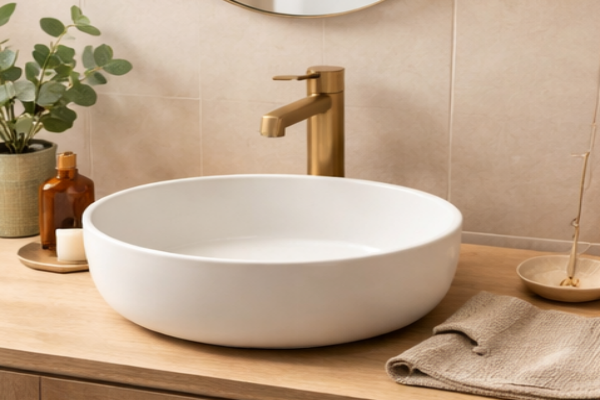
A wash basin is most often installed in spaces dedicated to personal care rather than household cleaning. In most homes, that means the main bathroom, an en-suite bathroom, a powder room, or a small wash area near a toilet. Its placement is not accidental: the fixture is positioned where people naturally need quick access to water for hygiene routines before leaving the house, returning home, or getting ready for bed.
The location of a wash basin is closely tied to its purpose. It is intended for washing the body in small, everyday ways, not for handling cookware, food, laundry, or oversized cleaning tasks. That is why it is usually smaller and shallower than fixtures found in kitchens or utility spaces. The goal is not capacity, but convenience. A well-placed wash basin helps support smooth daily routines while fitting comfortably into the available bathroom layout.
Aspect | Wash Basin |
Typical location | Bathroom, powder room, wash area |
Main purpose | Personal hygiene |
Common daily uses | Handwashing, face washing, brushing teeth, shaving |
Usual design focus | Easy access, comfort, compact use |
What makes a wash basin distinct is the role it plays in everyday bathroom use. A toilet serves sanitation, a shower or bathtub supports full-body washing, and storage units hold toiletries and supplies. The wash basin, by contrast, is centered on short, repeated hygiene tasks that happen throughout the day. Its design reflects that purpose through accessible height, manageable depth, and a form that supports quick use without unnecessary effort.
It is also a fixture shaped by direct human interaction. People lean over it, use it in front of a mirror, and rely on it for fast transitions during daily routines. For that reason, a wash basin is defined less by decoration and more by how effectively it supports comfort, cleanliness, and repeated use in a bathroom setting.
Many people use “wash basin” and “sink” as if they mean exactly the same thing. In everyday conversation, that is understandable because both refer to a plumbing fixture with a bowl, a faucet, and a drain, and both are used with water for washing. In home listings, casual product descriptions, and even general conversation, the terms often overlap without causing confusion.
The overlap becomes more noticeable because regional language habits also influence word choice. In some settings, “sink” is treated as a broad everyday term for almost any wash fixture, while “wash basin” sounds more specific and is often tied to bathroom use. So although the two expressions can point to similar objects, the surrounding context usually determines which one is the better fit.
The clearest difference is not in basic structure, but in where the fixture is used and what it is designed to handle. A wash basin is generally linked to bathrooms, powder rooms, and wash areas where people carry out personal hygiene routines such as washing hands, rinsing the face, brushing teeth, or shaving. A sink, by contrast, is more commonly associated with kitchens, utility rooms, or laundry spaces, where it is expected to handle larger items, deeper bowls of water, and heavier cleaning work.
Term | Usual setting | Main use | Typical design focus |
Wash basin | Bathroom or powder room | Personal hygiene | Compact, comfortable, visually suited to bathroom use |
Sink | Kitchen, utility room, laundry area | Washing dishes, food prep, general cleaning | Greater depth, capacity, and durability |
Because of that difference, people often expect a bathroom fixture to be smaller, shallower, and easier to use for short daily routines, while a kitchen or utility sink is expected to be more work-oriented.
“Wash basin” is the more accurate term when the discussion is clearly about a bathroom fixture for personal washing. If the topic involves bathroom planning, hygiene use, basin styles, or choosing the right fixture for a powder room, using “wash basin” helps keep the meaning precise. In those cases, it tells the reader immediately that the fixture is intended for bathroom use rather than broader cleaning tasks.
Among the most common choices in modern bathrooms, wall-mounted and pedestal wash basins remain popular because they are practical, familiar, and easy to fit into everyday layouts. A wall-mounted wash basin is attached directly to the wall, which helps free up floor space and gives the room a lighter, less crowded feel. This makes it especially useful in bathrooms where movement space matters. Because the basin does not rely on a full cabinet base, it can also make a compact room feel more open.
A pedestal wash basin offers a more classic structure. The basin is supported by a pedestal below, which helps conceal plumbing and gives the fixture a more finished appearance. This style works well in bathrooms where exposed pipes would distract from the overall look. Compared with wall-mounted options, pedestal models usually provide a more traditional visual balance, while still serving the same daily hygiene needs such as handwashing, face washing, brushing teeth, and shaving.
The main difference between the two is how they use space and how much of the plumbing remains visible. Wall-mounted basins often expose at least part of the pipework unless additional design elements are added, while pedestal basins are better at hiding those functional parts. For homeowners choosing between them, the decision usually comes down to whether they prioritize an open floor area or a more concealed, classic presentation.
Countertop and vessel wash basins are often selected for bathrooms where design has a stronger visual role. Instead of blending quietly into the room, these basins tend to stand out as part of the overall interior concept. A countertop basin is placed on or integrated with a surface in a way that makes the vanity area feel more intentional and decorative. A vessel wash basin goes even further by sitting above the counter like a separate bowl, creating a sculptural focal point in the bathroom.
These options appeal to people who want a more modern or styled bathroom, but they also come with practical points to consider. Because the basin sits higher or more prominently, faucet height, splash control, and surrounding counter space become more important. Cleaning can also require a little more attention around the base or edges, depending on the design. Even so, many people choose these types because they combine everyday function with stronger visual character, making the wash basin feel like part of the room’s identity rather than only a utility fixture.
Wash basin type | Best suited for | Main advantage | Main consideration |
Wall-mounted | Small or practical bathrooms | Saves floor space | Plumbing may be more visible |
Pedestal | Standard family bathrooms | Hides pipework well | Takes up more visual floor area |
Countertop | Modern vanity layouts | Strong design presence | Needs well-planned counter pairing |
Vessel | Style-led interiors | Decorative focal point | Height and splash control matter |
Corner/compact | Tight layouts and powder rooms | Maximizes limited space | Basin area is usually smaller |
For small bathrooms, powder rooms, and narrow layouts, corner and compact wash basin designs offer a practical way to keep the room functional without sacrificing too much space. These models are intended for situations where a standard basin may feel oversized or interrupt movement around the toilet, door, or shower area. By fitting into unused corners or using reduced dimensions, they solve layout problems while still performing the same core function as any other wash basin.
What makes these options valuable is not a change in purpose, but a smarter response to spatial limits. They still support everyday personal hygiene, yet they do so in a footprint better suited to constrained rooms. That makes them especially useful in guest bathrooms and compact urban homes where every section of wall or floor space has to work efficiently.
Choosing the right wash basin starts with understanding how the bathroom will actually be used. A basin that looks attractive in a product photo may feel awkward in daily life if it is too wide for the vanity, too shallow to contain splashing, or too deep to use comfortably. The size of the bathroom matters first, but so does the width of the counter or vanity unit, the available movement space in front of the fixture, and how many people use it each day. In smaller bathrooms, a compact basin may improve circulation and keep the room from feeling crowded. In a larger bathroom, a broader basin often feels more balanced and gives the user more elbow room.
Shape also affects function more than many buyers expect. Round and oval basins often soften the look of a bathroom and can work well in tighter spaces, while rectangular or square designs usually create a more structured appearance and may provide a wider washing area. The best choice depends on how the basin fits the counter, faucet placement, and the user’s normal habits. A basin that is too flat may allow water to spread easily, while one with better depth and interior slope can improve splash control and help water drain more cleanly. Everyday comfort should guide the decision: the basin should feel easy to approach, practical for brushing teeth or washing hands, and proportionate to the room around it.
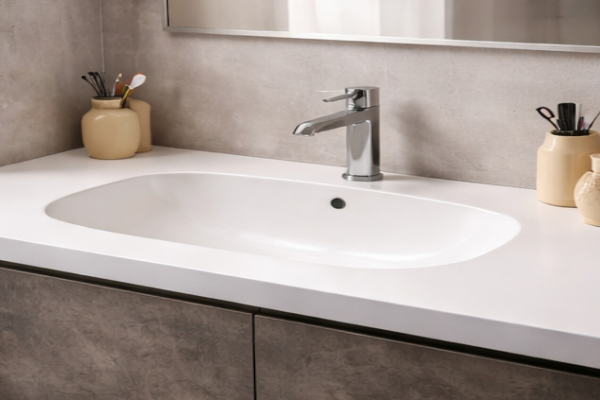
When comparing options, it helps to keep a few practical checks in mind:
● Make sure the basin size matches the vanity width rather than overwhelming it.
● Leave enough surrounding space for hand movement, faucet use, and nearby items.
● Consider whether the bowl depth will reduce splashing during normal use.
● Think about who uses the bathroom most often and whether the height and reach feel comfortable.
● Check that the chosen shape supports easy cleaning and smooth drainage.
Material choice should be guided less by novelty and more by how the basin will perform over time. Some materials are valued for durability and low maintenance, while others are chosen mainly for visual effect. In most homes, ceramic and porcelain remain the most practical starting points because they are widely used, easy to clean, and suited to everyday bathroom routines. They offer a familiar finish and generally work well in both classic and modern interiors.
Other materials can be the right fit when the buyer has more specific priorities. Glass can create a cleaner, more contemporary statement, but it may show water marks more easily and usually needs more frequent wiping to stay polished. Stone offers a richer, more natural appearance and often feels more premium, yet it can require more care and may be less forgiving if maintenance is neglected. Stainless steel is durable and resistant to corrosion, making it practical in some modern or commercial-style settings, though it may not suit every bathroom look. Acrylic tends to be lighter and more budget-friendly, which can make it appealing for certain renovations, but it generally does not project the same long-term solidity as harder surface materials.
Material | Best for | Main strength | Main consideration |
Ceramic | Most everyday bathrooms | Easy to clean and widely practical | Can chip under strong impact |
Porcelain | Homes wanting a refined classic finish | Durable, smooth surface | Surface damage can be noticeable |
Glass | Modern, design-led bathrooms | Striking visual effect | Shows water spots more easily |
Stone | Premium or natural-style interiors | Rich appearance and individuality | Higher maintenance needs |
Stainless steel | Contemporary or utility-influenced spaces | Strong and corrosion-resistant | Less warm or decorative in some bathrooms |
Acrylic | Budget-conscious or lightweight installations | Affordable and easy to handle | Less robust over long-term heavy use |
The key is to decide what matters most in your bathroom: a low-maintenance surface, a distinctive appearance, a tighter budget, or a material that feels more luxurious. That approach helps narrow the choices quickly without turning the decision into a long checklist of technical details.
A good wash basin should fit the style of the bathroom, but it should also remain practical after the renovation excitement fades. A design that looks impressive on day one may become frustrating if it is difficult to wipe down, collects water around the edges, or makes routine use less comfortable. This is why visual preference should always be connected to maintenance and long-term usability. The basin needs to work with the faucet, vanity surface, and surrounding layout, but it also needs to suit the pace of everyday life in the home.
For example, a highly decorative basin may be perfect in a guest bathroom that sees light use, while a family bathroom usually benefits from a form that is simpler to clean and more forgiving of constant use. Households with children may prefer materials and shapes that resist visible wear and help limit splashing. People designing a master bathroom may place more emphasis on appearance, but even then, ease of upkeep still matters. Choosing the right wash basin means balancing style with real habits: how often the fixture will be used, how much cleaning effort the household is willing to commit, and whether the design will still feel convenient several years later.
A wash basin is a bathroom fixture for daily personal hygiene. Knowing its meaning, types, and differences from a sink helps you choose better. The right wash basin should match your space, needs, and style. TRANSTAR Machinery Co., Ltd. delivers reliable product value through practical design, durable quality, and professional service.
A: A wash basin is a bathroom fixture used for handwashing, face washing, and other personal hygiene tasks.
A: A wash basin usually refers to a bathroom unit, while a sink often describes kitchen or utility fixtures.
A: A compact wash basin, such as a wall-mounted or corner model, is usually best for limited bathroom space.


