
- All
- Product Name
- Product Keyword
- Product Model
- Product Summary
- Product Description
- Multi Field Search
Views: 0 Author: Site Editor Publish Time: 2026-08-21 Origin: Site


Upgrading bathroom tapware requires balancing aesthetic goals against structural reality. You want a beautiful space. You also need long-term reliability. The hardware you select dictates how easily your bathroom functions every day. A poor choice often creates frustrating daily experiences. A well-planned plumbing layout transforms a basic cubicle into a functional retreat.
The choice between a concealed and an exposed system extends far beyond visual design. Your decision impacts upfront plumbing requirements directly. It determines your necessary wall cavity depth. It also changes future repair accessibility completely. Making the wrong choice often leads to complex installation hurdles. Compromised waterproofing can cause devastating internal rot down the line.
This guide provides a grounded, technical comparison to navigate these exact challenges. We explore structural demands, space efficiency, maintenance realities, and strict compliance standards. Read on to discover actionable insights. You will learn how to make a risk-aware, confident decision for your next project.
Installation Scope: Concealed mixers require a sufficient wall cavity and are best suited for new builds or full renovations; exposed mixers are ideal for retrofitting with minimal structural disruption.
Total Cost of Ownership: While base unit prices may be similar, concealed systems incur higher installation labor and waterproofing costs.
Space & Aesthetics: Concealed units offer a minimalist, space-saving footprint often seen in premium hotel shower tapware, whereas exposed units offer industrial or classic design statements.
Maintenance: Exposed valves are 100% accessible; modern concealed valves mitigate behind-the-wall risks via accessible faceplates, but catastrophic leaks still require tile removal.
Compliance: Regardless of choice, verifying regional certification (e.g., specifying a WaterMark shower mixer in Australia) is non-negotiable for insurance and safety.
Categorizing these structural solutions helps clarify your plumbing options. We start by defining a concealed shower mixer. This system hides its functional core securely inside the wall cavity. You only see the control handle and the showerhead. It delivers a highly streamlined finish. The intricate mixing mechanisms remain entirely out of sight. This creates a clean, modern aesthetic favored by minimalist designers.
Conversely, an exposed fixture mounts directly onto the finished tile surface. Plumbers frequently call this a wall mounted shower mixer. The entire valve body sits outside the wall. The controls, diverter, and riser pipe remain completely visible. You interact directly with the main brass housing every time you turn on the water.
We must examine the component breakdown to understand how they operate. Hidden systems rely on a robust rough-in box. The concealed shower valve connects directly to your hot and cold water supply lines. Plumbers mount it securely to timber blocking behind the wall studs. Later, you attach a decorative trim kit over the finished tiles. This trim includes the external handle and faceplate. It seals the gap between the tile and the internal valve.
Exposed systems act as a singular, all-in-one assembly. The bar valve connects directly to water outlets protruding from your wall. They do not use a separate rough-in box inside the framing. You simply screw the main unit onto eccentric connectors. Plumbers then slide cover rosettes over the joints to hide the raw threads. This creates a functional, immediate water control hub right in the shower enclosure.
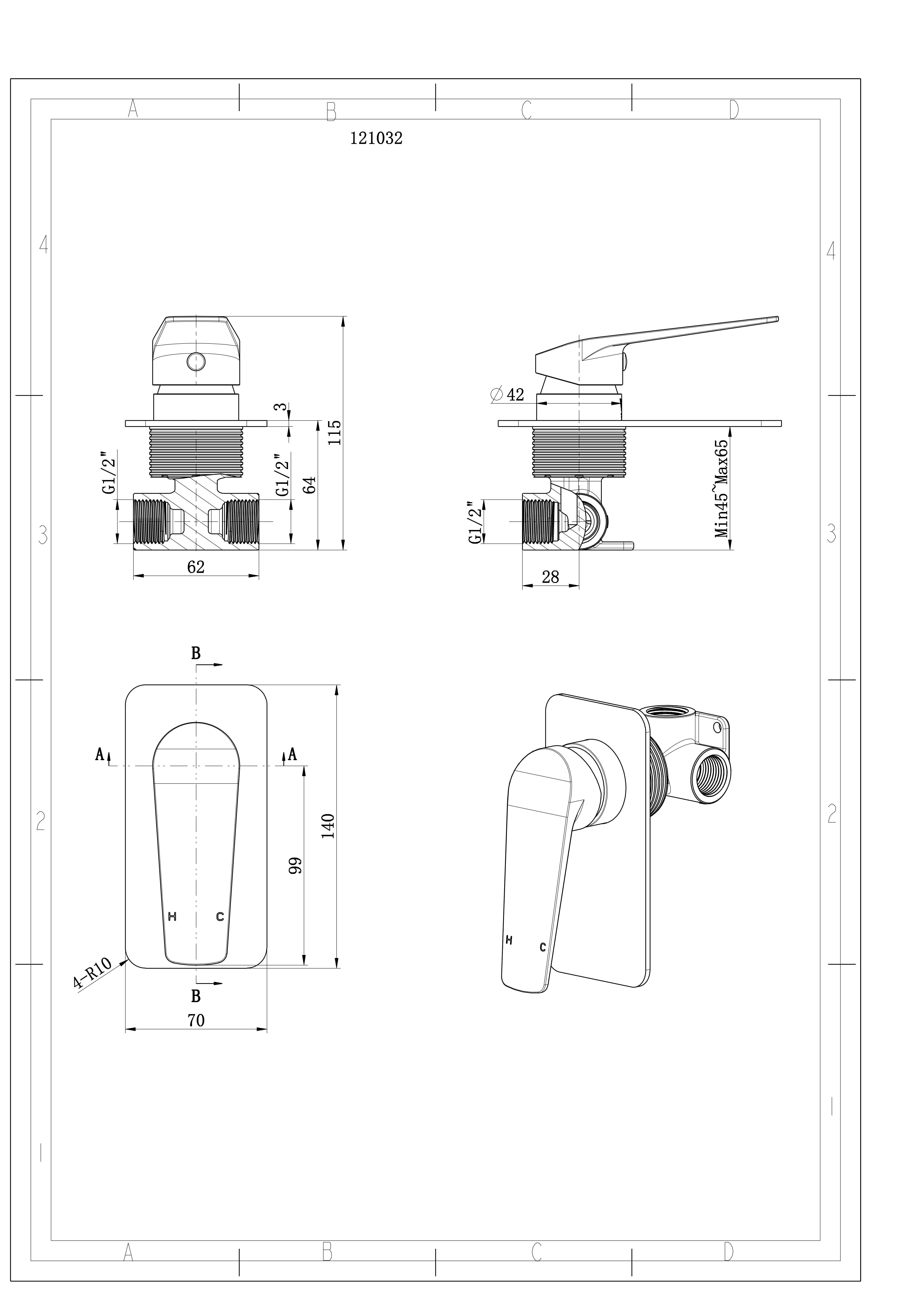
Implementation carries specific physical risks. Wall depth poses the very first structural hurdle. Hidden systems demand sufficient cavity space to house the rough-in box securely. Most standard brands require a minimum internal thickness ranging from 50mm to 70mm. Standard timber stud walls usually accommodate this depth comfortably. Plumbers can easily mount a timber noggin between the studs to secure the brass body.
However, solid brick or concrete walls complicate this process heavily. Plumbers must chase deep channels into the masonry. This creates substantial dust, noise, and physical labor. Core drilling and grinding into structural walls also require careful planning. You must ensure you do not compromise the load-bearing capacity of the brickwork.
Waterproofing integrity presents another critical factor. Every concealed fixture breaches your primary waterproof membrane. Professional tilers must apply specialized sealing collars. They use flexible polyurethane sealants around the rough-in box. This prevents moisture from seeping backward into the wall framing. Poor sealing leads to devastating structural rot. A tiny gap in the silicone allows steam to penetrate the wall cavity daily.
Consider the overall scope of your renovation. Retrofitting suits exposed units perfectly. You can swap an existing surface-mounted fixture without touching the tiles behind it. Plumbers just isolate the water, unscrew the old bar valve, and attach the new one. Alternatively, hidden designs demand a complete down-to-studs approach. You must strip the bathroom back to its bare framing. They remain highly impractical for quick cosmetic upgrades.
We evaluate features based on the real-world outcomes they produce. The minimalist advantage stands out immediately in modern bathrooms. Hidden systems free up valuable physical space. They maximize elbow room inside compact shower enclosures. You easily avoid bumping your hips against hot, protruding metal valves. In a tight 800x800mm shower stall, removing external hardware vastly improves daily comfort.
This flush look dominates high-end residential design. Luxury builders specify hotel shower tapware almost exclusively in concealed formats. It creates a seamless, upscale sanctuary. The lack of visible pipework keeps visual focus entirely on premium tiling or large-format stone slabs. Beautiful finishes like brushed nickel, gunmetal, or matte black integrate seamlessly into the wall. The trim plate offers a refined, low-profile focal point.
Still, exposed pipes offer tremendous design flexibility. Many homeowners actively desire visible hardware for specific architectural themes. Industrial loft conversions benefit hugely from bold, dark pipework traversing the tiles. Authentic Victorian restorations often rely on classic, surface-mounted brass valves to complete a period look. An exposed shower mixer does not indicate inferior design. It simply serves a distinctly different visual aesthetic.
Designers often utilize surface-mounted systems to create a deliberate statement piece. A beautifully polished chrome bar valve adds mechanical charm. It shows off the engineering of the water flow. You must align your hardware choice directly to your overarching architectural vision. Do not default to a hidden system if your home demands classic industrial charm.
Many homeowners fear a hidden leak destroying their walls. Let us address this skepticism directly. Decades ago, burying a valve carried massive risks. A small internal drip could rot timber frames for months undetected. Today, modern rough-in boxes use highly intelligent engineering to protect your property. High-quality enclosures capture tiny internal drips. They channel escaping moisture forward. The water exits safely over the shower floor rather than soaking into your framing.
Accessibility for routine repairs differs vastly. You must understand how plumbers service these units.
Concealed Repairs: You can usually replace worn thermostatic cartridges by removing the external faceplate. You isolate the water, loosen a hidden grub screw, and pull off the handle. You do not need to break any tiles for standard maintenance. The core brass body remains intact behind the wall.
Exposed Repairs: You enjoy absolute maximum accessibility. A plumber can swap the entire unit using basic spanners. The process usually takes under an hour. You also access built-in mesh filters easily to clear debris. This proves invaluable in homes utilizing older, sediment-heavy pipework.
Cleaning requirements also divide the two options. Hidden designs feature fewer exposed metallic surfaces. You spend less time wiping away stubborn hard water stains. You avoid scrubbing soap scum off intricate horizontal pipes. Exposed units demand more frequent polishing. Water constantly hits the main valve body. Limescale builds up quickly on the upper surfaces. This requires diligent upkeep to maintain a pristine, reflective finish.
Authoritativeness and safety rely heavily on strict industry standards. Pressure compatibility dictates your final valve choice. Gravity-fed home plumbing often requires specialized low-pressure manual valves. These systems rely on wide internal waterways to maintain a usable shower stream. High-pressure unvented systems pair excellently with advanced thermostatic cartridges. Always verify your specific dynamic water pressure before purchasing hardware. Installing a high-pressure valve on a low-pressure system results in a frustrating trickle.
Certifications matter significantly for long-term safety. Installing compliant fixtures represents a legal and insurance necessity. Specifying a WaterMark shower mixer guarantees structural integrity in certified regions. It ensures the manufacturer uses dezincification resistant (DR) brass. DR brass prevents zinc from leaching out over time due to aggressive water chemistry. This stops the metal from becoming brittle and cracking inside your wall.
Certification also verifies the product meets strict lead-safe requirements. You want absolute certainty regarding the metals touching your water supply. Uncertified, imported valves often use cheap alloys. These alloys degrade rapidly under constant thermal expansion and contraction.
Brand warranties act as your final safety net. Never bury a low-quality valve behind expensive tile. A comprehensive 10-year warranty serves as a non-negotiable baseline. It proves the manufacturer fully trusts their internal engineering. Look for warranties covering both the brass body and the internal ceramic disc cartridges. Robust guarantees protect your initial material investment.
We can map these variables into a clear decision framework. Use this shortlisting logic to finalize your choice confidently. You must weigh structural reality against visual desire.
Choose a concealed system if you are executing a full, bare-stud bathroom renovation.
Choose a concealed system if maximizing physical elbow room in a small cubicle is critical.
Choose an exposed system if you are upgrading existing fixtures without removing tiles.
Choose an exposed system if you have solid masonry walls and want to avoid heavy channeling.
Choose an exposed system to match a specific industrial, retro, or heritage aesthetic perfectly.
Here is a simplified comparison chart highlighting the operational differences:
Evaluation Feature | Concealed System | Exposed System |
|---|---|---|
Space Efficiency | High (minimal wall protrusion) | Low (projects outward into shower) |
Installation Complexity | High (requires precise cavity planning) | Low (mounts directly to finished surface) |
Retrofit Suitability | Poor (usually requires full re-tiling) | Excellent (allows for fast, clean swaps) |
Routine Maintenance | Accessible via front faceplate only | Fully accessible exterior components |
Visual Footprint | Sleek, flush, and minimalist | Prominent, mechanical, and classic |
Review this matrix carefully. Discuss these points thoroughly with your installation team. Your final selection shapes the daily usability of your new space.
The final verdict depends entirely on your specific project scope. Neither approach holds objective superiority over the other. Your wall structure, aesthetic goals, and appetite for structural modifications dictate the winner. Hidden designs deliver unmatched modern minimalism. They create uncluttered, spa-like environments. Surface-mounted units provide pragmatic accessibility and distinct stylistic charm. They excel in fast retrofits and period restorations.
Your next step involves assessing your physical space carefully. Consult your plumber regarding wall-depth constraints early in the planning phase. Verify your structural framing before purchasing any rough-in boxes. Take time to measure your shower enclosure to see if an protruding valve causes space issues. Always prioritize certified, lead-safe hardware to protect your property long-term. Browse compliant, high-quality collections today. Find the perfect, reliable match to complete your bathroom sanctuary.
A: Yes, but it requires significant labor. You must remove the existing tiles to access the wall cavity. Plumbers need to alter the internal pipework to house the rough-in box. Afterward, you must apply a new waterproof membrane before re-tiling the entire shower area. It functions as a major renovation, not a simple swap.
A: They do not require a special wall, but standard timber stud walls offer the easiest installation. They provide natural hollow cavities for the valve box. Solid brick or concrete walls present major difficulties. Plumbers must channel deep grooves into the masonry to hide the hardware safely.
A: The base unit costs remain fairly comparable between both styles. However, the total installation process runs roughly 20-40% higher. Hidden systems demand extensive plumbing preparation. They also require meticulous waterproofing and precise tile cutting around the rough-in box, driving up specialized labor fees.
A: Most leaks stem from a worn internal cartridge. You can fix this easily by removing the external faceplate and swapping the cartridge out. You do not need to break tiles for this routine fix. However, a catastrophic brass valve failure deep inside the wall does require tile removal.


