
- All
- Product Name
- Product Keyword
- Product Model
- Product Summary
- Product Description
- Multi Field Search
Views: 0 Author: Site Editor Publish Time: 2026-07-29 Origin: Site


Upgrading a kitchen workspace requires balancing ergonomic flexibility against long-term mechanical reliability. Both designs solve the problem of limited static water flow effectively. However, they achieve this goal through entirely different mechanical approaches. The choice dictates exactly how you wash dishes daily. It also defines how your sink interacts smoothly around cabinetry, island clearances, and under-sink plumbing. This choice represents more than just a visual preference. It directly impacts your routine culinary chores. We will explore the distinct structural architectures defining these two popular options. You will discover their functional strengths, hidden limitations, and ideal sink pairings. Understanding these core mechanics helps you match the right design to your cooking habits. You will learn how to evaluate your current setup accurately. Our goal is to ensure your final selection offers lasting performance and practical daily convenience.
Spatial Dependency: 360 swivel mixers are optimal for kitchen islands and large double-basin sinks where unobstructed rotation is required, whereas pull out models excel in compact spaces or deep single basins.
Mechanical Longevity: Fixed-spout swivel faucets generally outlast pull out designs due to the absence of retractable hoses, gravity weights, and docking mechanisms prone to wear.
Functional Reach: Pull out models offer superior directional control for rinsing sink corners and filling pots on countertops, often featuring dual spray options that swivel models lack.
Under-Sink Constraints: Pull out faucets require unobstructed under-sink clearance for the gravity ball/retraction system to function smoothly, a factor irrelevant to standard swivel installations.
Understanding the internal engineering helps you predict long-term performance. You must know how water travels through the spout. These two designs manage water delivery using entirely different frameworks. We need to examine their internal components closely.
The fixed-hose architecture operates simply and reliably. The spout itself rotates on a base cartridge or a series of rubber O-rings. There is no extendable component hiding inside. The reach depends entirely on the fixed length and the arc of the metal spout. Water flows straight from the supply lines into the main valve. It then travels up the rigid brass or stainless steel neck. You pivot the spout physically to direct the water flow. This design embraces structural simplicity. It eliminates the need for flexible internal pathways.
This style utilizes a clever hose-within-a-body design. A flexible braided hose runs hidden through the main spout interior. It terminates at the end in a removable spray head. You pull this head outward to extend your reach across the basin. Retracting this head relies heavily on gravity.
A weighted gravity ball clamps onto the hose beneath the sink.
When you pull the spray head, the weight lifts upward.
When you release the head, the weight drops downward.
This downward force pulls the hose smoothly back into the spout housing.
Some models use a tension spring system instead of a gravity weight. Both methods require precise internal alignment. The spray head usually locks back into place via mechanical clips or magnetic docking collars.
Every mechanical device eventually requires maintenance. You face a distinct reliability trade-off here. O-ring wear represents the primary failure point for a swivel model. The base might develop a slow leak after years of constant rotation. You can usually fix this quickly by replacing a cheap rubber seal. In contrast, hose fraying plagues pull out models. The flexible hose rubs against the internal brass neck repeatedly. Docking mechanism fatigue also occurs frequently. Plastic clips lose their tension over time. This leaves you staring at a dangling spray head.
Component | 360 Swivel Risk Profile | Pull Out Risk Profile |
|---|---|---|
Internal Pathways | Rigid metal tube; highly durable. | Flexible braided hose; prone to friction wear. |
Movement Mechanism | Base O-rings; simple replacement. | Gravity ball & hose; snagging risks. |
Spout Terminus | Fixed aerator; rarely fails. | Removable head; docking fatigue risk. |
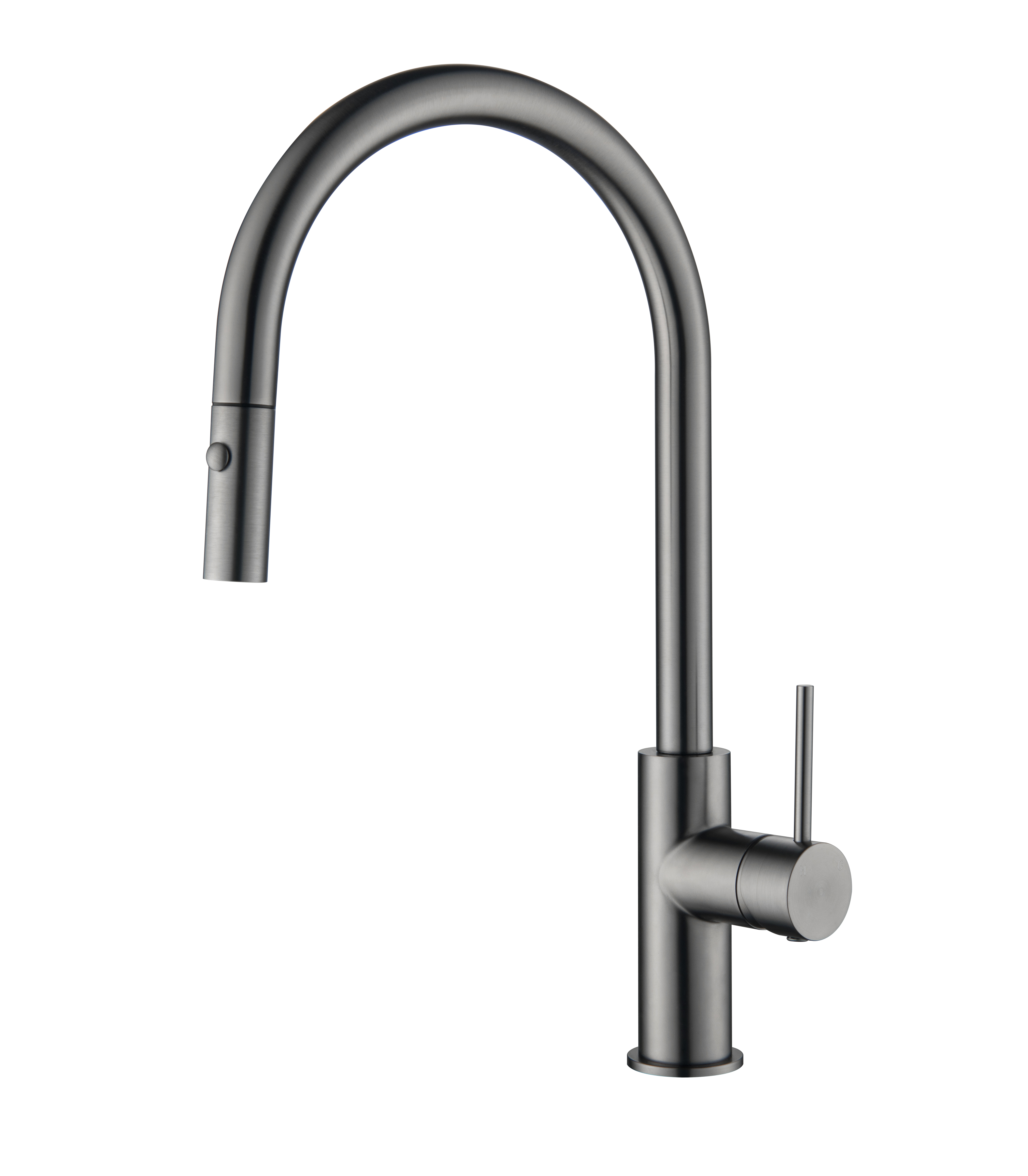
A classic design remains popular for excellent reasons. These fixed models prioritize unobstructed movement and heavy-duty reliability. They excel in specific spatial configurations. Let us explore where they perform best.
Full rotation proves highly valuable for kitchen islands or peninsula setups. Users often need to access the water stream from multiple sides simultaneously. Imagine a busy holiday prep session. One person can wash vegetables on the left side. Another person can quickly rinse their hands from the opposite side. You simply push the spout out of the way when handling oversized items. A true 360-degree rotation offers ultimate communal utility. It prevents workflow bottlenecks in open-concept kitchens.
A standard swivel kitchen faucet transitions seamlessly between washing and rinsing bowls. You do not need to hold the spout in your hand. You just pivot it sideways with a gentle nudge. This frees up both of your hands entirely. You can scrub a greasy plate in the soapy left basin. Then, you simply rinse it under the continuous stream running into the right basin. This creates an incredibly efficient, hands-free workflow.
Many homeowners appreciate the "buy-it-for-life" aspect. Fewer moving parts mean a substantially lower risk of internal leaks. The solid metal construction withstands aggressive daily use. You never worry about a hose snapping. You avoid the frustration of a weak retraction spring. These models typically outlast extendable versions by several years. Their straightforward engineering provides incredible peace of mind.
You face a noticeable inability to direct high-pressure water into far corners. Oversized or commercial-style sinks often develop dry spots. The water stream simply cannot reach the edges. You must wipe these distant corners manually using a sponge. You also cannot pull the water stream down close to a shallow drain. Rinsing stubborn food particles down the disposal takes more manual effort.
Modern culinary tasks often demand extreme flexibility. Ergonomic control defines the modern kitchen experience. These extendable designs bring powerful utility right to your fingertips. They solve problems fixed spouts simply cannot handle.
You gain the massive ergonomic benefit of bringing the water directly to the object. Rinsing heavy cast iron pans becomes virtually effortless. You no longer maneuver a heavy stock pot awkwardly beneath a fixed stream. You just pull the nozzle outward. You spray every internal angle of the pot while it rests flat on the basin floor. This prevents unnecessary wrist strain. It speeds up post-dinner cleanup significantly.
These variants frequently incorporate a dual spray kitchen mixer head. Users can switch instantly between an aerated stream and a high-pressure sweep. The aerated stream fills glasses quickly without splashing. The high-pressure sweep acts like a power washer. It blasts baked-on cheese off dinner plates effortlessly. This enhances task versatility tremendously. Standard swivel models generally lack this toggling capability.
Lowering the spray head deep into the basin minimizes splashback immensely. Splashback remains a notoriously common issue. It happens frequently when pairing high-arc fixed faucets inside shallow sinks. You end up soaking your shirt while washing a spoon. By pulling the nozzle closer to the drain, you contain the water energy. The surrounding countertops remain perfectly dry. You spend much less time wiping down adjacent surfaces.
You must confront the under-sink reality eventually. The retraction weight can easily snag on nearby shut-off valves. It routinely catches on garbage disposals or protruding plumbing pipes. This snagging disrupts the retraction completely. It leads directly to a sagging, loose spray head resting on your sink edge. You might find yourself constantly rearranging chemical bottles beneath the sink. You do this just to give the hose enough clearance to drop freely.
Pairing the wrong spout with your specific basin causes daily frustration. You must match the mechanics to the physical dimensions of your workspace. We developed an evaluation matrix to simplify this process.
We recommend a simple rule of thumb. Shallow and exceptionally wide sinks benefit greatly from extendable models. They manage splash effectively and reach distant corners easily. Conversely, deep and evenly divided sinks pair incredibly well with high-arc 360 swivel designs. The deep basin naturally contains splashing. The dividing wall makes pivoting the spout highly practical.
Sink Geometry | Recommended Style | Primary Rationale |
|---|---|---|
Wide, Shallow Single Bowl | Pull Out / Dual Spray | Reaches distant corners; prevents heavy splashing. |
Deep Double Bowl | 360 Swivel | Allows hands-free pivoting between the two compartments. |
Compact Bar/Prep Sink | Pull Out | Offers targeted rinsing without requiring a bulky high arc. |
Central Kitchen Island | 360 Swivel | Provides multi-directional access for multiple users simultaneously. |
You must measure your vertical and horizontal space meticulously. Warn your installer against placing limited-clearance handles too close to walls. You might smash your knuckles against the tile every time you want hot water. Furthermore, installing a tall 360 model directly beneath oversized upper cabinets restricts visibility. It can even block cabinet doors from opening fully. Always check your vertical clearance before purchasing.
You must outline the importance of verifying the flow rate. Advise buyers to check carefully for a certified WELS kitchen tap rating. This rating ensures the fixture meets strict local water consumption laws. The addition of dual-spray or high-pressure features does not automatically violate local efficiency standards. Well-engineered fixtures maintain powerful sweeping force while restricting overall gallon-per-minute usage. Always demand verified compliance paperwork from the manufacturer.
Making a smart investment requires looking past the shiny exterior finish. You must evaluate the hidden internal components rigorously. Poor material choices reveal themselves quickly after installation.
We strongly guide buyers away from plastic docking collars. They degrade rapidly and lose their grip. We also advise against cheap nylon hoses in extendable models. They fray against internal brass edges within months. Instead, we heavily recommend magnetic docking systems. These snap firmly into place every single time. We also suggest demanding braided stainless steel or high-density PEX internal hoses. They handle friction gracefully and resist bursting under high household water pressure.
Regardless of whether you choose a fixed swivel or an advanced pull out kitchen faucet, the internal valve matters most. The ceramic disc cartridge dictates the ultimate valve lifespan. Cheap plastic cartridges warp under extreme hot water temperatures. They develop annoying drips quickly. Solid ceramic discs glide smoothly against each other. They slice through the water flow cleanly. They practically eliminate the risk of handle stiffness and persistent dripping over a decade of use.
We highly advise conducting a pre-purchase audit of your under-sink cabinet. Open the doors and look inside carefully. Is the space heavily cluttered with bulky reverse osmosis filtration systems? Do you have a massive garbage disposal unit dominating the center? If you lack clear vertical drop space, a gravity ball cannot function. The hose will tangle constantly. In these cluttered environments, choosing a standard 360 swivel kitchen mixer is the safer, frustration-free installation choice. It requires absolutely zero moving clearance beneath the countertop.
Choosing the perfect fixture ultimately comes down to understanding your physical constraints. You should prioritize a 360 swivel model for open island installations. They provide minimal maintenance headaches and compliment double-bowl setups perfectly. Conversely, you should opt for a pull out model for maximum task flexibility. They dominate deep single-bowl sinks and intensive daily cleaning routines.
Measure your under-sink clearance before falling in love with a retractable design.
Assess your daily cooking habits honestly to determine if you need dual spray functionality.
Always verify internal material quality, focusing on ceramic cartridges and braided hoses.
Select any advanced kitchen sink mixer tap based strictly on geometric compatibility rather than mere aesthetics.
Take five minutes to review your basin dimensions today. This small effort guarantees a seamless, highly functional culinary workspace for years to come.
A: Yes. Most modern extendable models feature a base that swivels to some degree. They usually offer between 120 and 360 degrees of rotation. This combines both practical features. However, true unrestricted 360 rotation remains somewhat rarer on exceptionally heavy, commercial-style pull-down models due to structural weight constraints.
A: They face a slightly higher risk over time. You must address the reality of continuous friction wear. A braided hose moving daily over a 5 to 10-year lifecycle experiences more stress than static brass pipes. However, high-quality PEX hoses mitigate this risk significantly.
A: It presents a practical risk if bumped accidentally. A fully rotating spout might easily be pushed to face the dry countertop rather than the basin. You mitigate this risk by positioning the control handle securely and ensuring users turn the valve off completely after use.
A: Yes, it impacts them directly. Low home water pressure can render the secondary sweep function noticeably weak. The nozzle struggles to create enough velocity. Standard aerated swivel taps usually perform better under poor pressure conditions. They rely less on forceful restriction to operate correctly.


