
- All
- Product Name
- Product Keyword
- Product Model
- Product Summary
- Product Description
- Multi Field Search
Views: 0 Author: Site Editor Publish Time: 2026-02-25 Origin: Site


As smart toilet technology becomes increasingly popular in residential, commercial, and institutional projects, one key question continues to arise: is a tankless toilet better than a traditional tank toilet?
From a factory and project-specification perspective, this decision goes far beyond personal preference. It affects water efficiency, installation requirements, long-term maintenance, user experience, and overall system compatibility. With the rapid adoption of smart toilets worldwide, understanding the structural and functional differences between tankless and tank toilets has become essential for developers, contractors, and procurement teams.
At TRANSTAR Machinery Co., Ltd., we work closely with project partners to evaluate smart toilet configurations that balance performance, reliability, and cost. In this article, we provide a clear, practical comparison between tankless toilets and tank toilets, helping you determine which option is better suited for different applications.
Before comparing performance, it is important to understand how each system works.
A tank toilet uses a gravity-fed water tank mounted behind or above the bowl. Water is stored in the tank and released during flushing.
Key characteristics:
Relies on gravity and stored water
Simple mechanical structure
Widely compatible with existing plumbing
A tankless toilet connects directly to the water supply, using water pressure and electronic control systems to flush without storing water in a tank.
Key characteristics:
No visible tank
Requires stable water pressure and electricity
Often integrated with smart toilet features
Modern smart toilets are available in both tank and tankless designs, but the integration level differs significantly.
Feature | Tank Toilet | Tankless Toilet |
Smart control integration | Partial | Full |
Flush precision | Fixed volume | Pressure-controlled |
Design flexibility | Moderate | High |
Automation capability | Limited | Advanced |
Tankless designs are generally more compatible with fully integrated smart toilet systems, including sensor flushing, water temperature control, and self-cleaning functions.
Tank toilets operate using a fixed-volume flushing mechanism, where water is stored in a rear or concealed tank and released during use. While this design has proven reliable for decades, it presents certain limitations in environments with high-frequency usage, such as commercial buildings, public restrooms, and hospitality projects.
Even with modern dual-flush tank systems, water efficiency is still constrained by:
The physical tank capacity
Mechanical flushing components
Limited adaptability to partial waste scenarios
In practice, this means that tank toilets may use more water than necessary during light-use flushes. Over time, especially in facilities with hundreds of daily users, this inefficiency can translate into higher water consumption and operating costs.
That said, tank toilets still offer acceptable efficiency for:
Low-traffic residential use
Retrofit projects with plumbing limitations
Regions with stable water availability and lower conservation pressure
Tankless toilets use on-demand flushing technology, drawing water directly from the supply line and regulating volume electronically. This approach enables much greater precision and flexibility in water usage.
Key advantages include:
Precise water volume control, adjusted per flush
Reduced waste during partial or light flushes
Better alignment with modern water-saving standards and certifications
Because water is delivered only when required, tankless systems avoid the inefficiencies associated with storing and releasing a fixed volume. In smart toilet configurations, sensors and control units further optimize flushing based on actual use conditions.
From a sustainability standpoint, tankless smart toilets provide superior long-term water efficiency, particularly in:
Commercial buildings
Airports and transportation hubs
Hotels and resorts
Healthcare and aged-care facilities
For project developers and facility operators, reduced water consumption also supports lower utility costs and improved environmental compliance.
Tank toilets are generally easier to install due to their self-contained mechanical design. They are especially suitable for projects where infrastructure upgrades are limited.
Common application scenarios include:
Renovation projects, where existing plumbing layouts must be preserved
Older buildings, with limited electrical wiring or load capacity
Locations with restricted access to power outlets
Tank toilets rely on standard water supply connections and do not require additional electrical systems unless paired with basic smart seats. This makes them a practical choice when installation speed and simplicity are priorities.
Tankless toilets require more planning during installation, as they integrate electronic control systems and rely on water pressure rather than gravity.
Key requirements include:
Stable and sufficient water pressure
Dedicated electrical connections
Proper grounding and moisture protection
While installation complexity is higher, tankless systems provide greater architectural freedom. Without a tank, designers can achieve:
Cleaner bathroom layouts
Wall-hung or minimalist designs
Better space utilization in compact bathrooms
Aspect | Tank Toilet | Tankless Toilet |
Plumbing complexity | Low | Moderate |
Electrical requirement | None or minimal | Required |
Retrofit suitability | High | Medium |
New construction fit | Good | Excellent |
For new construction projects, tankless toilets integrate more seamlessly into modern smart bathroom systems.
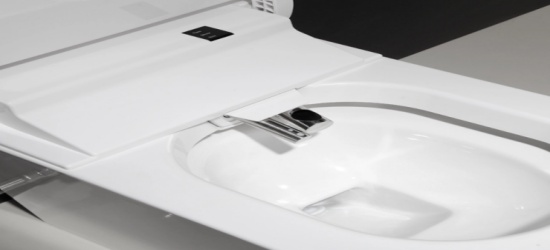
Flush performance is a critical factor in evaluating toilet systems, especially in environments with high usage frequency such as commercial buildings, public facilities, hotels, and transportation hubs. Traditional tank toilets rely on stored water to generate flushing force, which means their performance is directly affected by refill time and tank volume.
In high-traffic environments, this design can lead to:
Inconsistent flush strength, particularly when the tank has not fully refilled
Reduced effectiveness during peak usage periods, increasing the risk of incomplete flushing
Longer recovery time between consecutive uses
These limitations can negatively impact user satisfaction and increase maintenance demands.
Tankless toilets address these issues by using direct water supply and electronic control. Instead of waiting for a tank to refill, they deliver:
Constant and predictable flush strength
Immediate readiness between uses, even during peak traffic
Reliable performance in continuous-use environments
This consistency is particularly important in public and commercial settings, where performance variability can lead to complaints, hygiene concerns, and higher operational costs. From a facility management perspective, consistent flushing performance also reduces the need for repeat flushing and manual intervention.
Tankless smart toilets are engineered to support fully integrated smart functions that enhance both comfort and hygiene. Common features include:
Instant warm water bidet systems, eliminating waiting time
Adjustable water pressure and temperature, allowing personalized use
Automatic flushing and deodorization, improving cleanliness and air quality
These functions significantly elevate the overall user experience. In premium residential projects, they contribute to a sense of luxury and wellness. In commercial and public facilities, they support hygiene standards while delivering a modern, professional image. The integration of smart controls also aligns well with broader smart home and smart building trends.
Simple internal mechanical components
Easy access for repairs
Lower upfront maintenance cost
While tank toilets are relatively easy to service, their mechanical components are subject to gradual wear, often requiring more frequent maintenance over extended service life.
Fewer moving mechanical parts
Advanced self-diagnostic systems
Reduced need for manual adjustment
From a factory and project perspective, tankless smart toilets offer better long-term stability when produced under strict quality control and supported by professional after-sales service. Their electronic systems enable performance monitoring and early fault detection, helping reduce unexpected downtime and improve lifecycle reliability.
Tankless toilets are ideal for:
Compact bathrooms
Modern architectural designs
Wall-hung or minimalist layouts
Removing the tank allows:
More flexible placement
Cleaner visual lines
Easier integration with smart bathroom systems
Tank toilets remain suitable for traditional layouts but offer less design flexibility.
Cost Factor | Tank Toilet | Tankless Toilet |
Initial purchase | Lower | Higher |
Installation | Lower | Higher |
Water savings | Moderate | High |
Smart feature value | Limited | Extensive |
Long-term ROI | Moderate | Strong |
While tank toilets have lower upfront costs, tankless smart toilets often deliver better total cost of ownership in high-usage environments.
There is no one-size-fits-all answer. The better choice depends on project scale, infrastructure, budget, and performance expectations.
Choose a tank toilet if simplicity, low cost, and retrofit flexibility are priorities.
Choose a tankless smart toilet if water efficiency, hygiene, automation, and long-term value are critical.
At TRANSTAR Machinery Co., Ltd., we support both configurations and help partners select smart toilet solutions that match real-world project demands. Our manufacturing focus ensures consistent quality, compliance, and reliability across residential and industrial applications.
If you are planning a smart toilet project or evaluating tankless versus tank systems for large-scale deployment, our team is ready to support your decision-making process with technical insight and production expertise.
Q1: Are tankless toilets suitable for areas with low water pressure?
Tankless toilets require stable water pressure. In low-pressure areas, pressure-boosting solutions may be necessary.
Q2: Do tankless smart toilets consume more electricity?
They use electricity for control systems and comfort features, but energy consumption remains relatively low and efficient.
Q3: Are tank toilets easier to repair than tankless toilets?
Tank toilets are mechanically simpler, but modern tankless systems are designed for reliability and reduced service frequency.
Q4: Can tankless toilets meet water-saving regulations?
Yes. Tankless smart toilets are often better aligned with modern water efficiency standards due to controlled flushing.


