
- All
- Product Name
- Product Keyword
- Product Model
- Product Summary
- Product Description
- Multi Field Search
Views: 362 Author: Site Editor Publish Time: 2026-04-23 Origin: Site


Choosing the right metal for your bathroom is a decision that lasts for decades. When you stand in the aisle or browse online for a new bathroom faucet, the debate usually boils down to two heavyweights: solid brass and stainless steel. Both materials promise durability, but they handle the humid, wet environment of a bathroom very differently.
The "better" choice depends on your priorities. Are you looking for a modern minimalist aesthetic that resists fingerprints? Or do you want a heavy, high-end feel that offers timeless elegance? In this guide, we break down the chemical and functional differences between brass and stainless steel. We will help you decide which material belongs in your home by looking at corrosion resistance, maintenance, and long-term value. Let's dive into the expert insight on bathroom metallurgy.
To understand which is better, you must know what these metals are made of. Brass is an alloy primarily composed of copper and zinc. It has been the industry standard for high-end plumbing for centuries. Because copper has natural antimicrobial properties, it is an excellent choice for a bathroom faucet where hygiene is a priority.
Stainless steel, specifically the 304 or 316 grades used in premium fixtures, is an iron-based alloy containing at least 10.5% chromium. This chromium creates an invisible "passive layer" on the surface. This layer protects the metal from rusting. While brass is often plated with other metals (like chrome or nickel), stainless steel is usually solid through and through. If you scratch a stainless steel modern minimalist fixture, the metal underneath is the same as the surface. With brass, a deep scratch might reveal the yellow metal beneath a silver coating.
Brass is significantly heavier than stainless steel. When you hold a solid brass wall mounted fixture, it feels substantial. This weight often equates to quality in the minds of many homeowners. Stainless steel is lighter but remarkably strong. It allows for thinner, sleeker designs that fit perfectly in a modern minimalist bathroom layout.
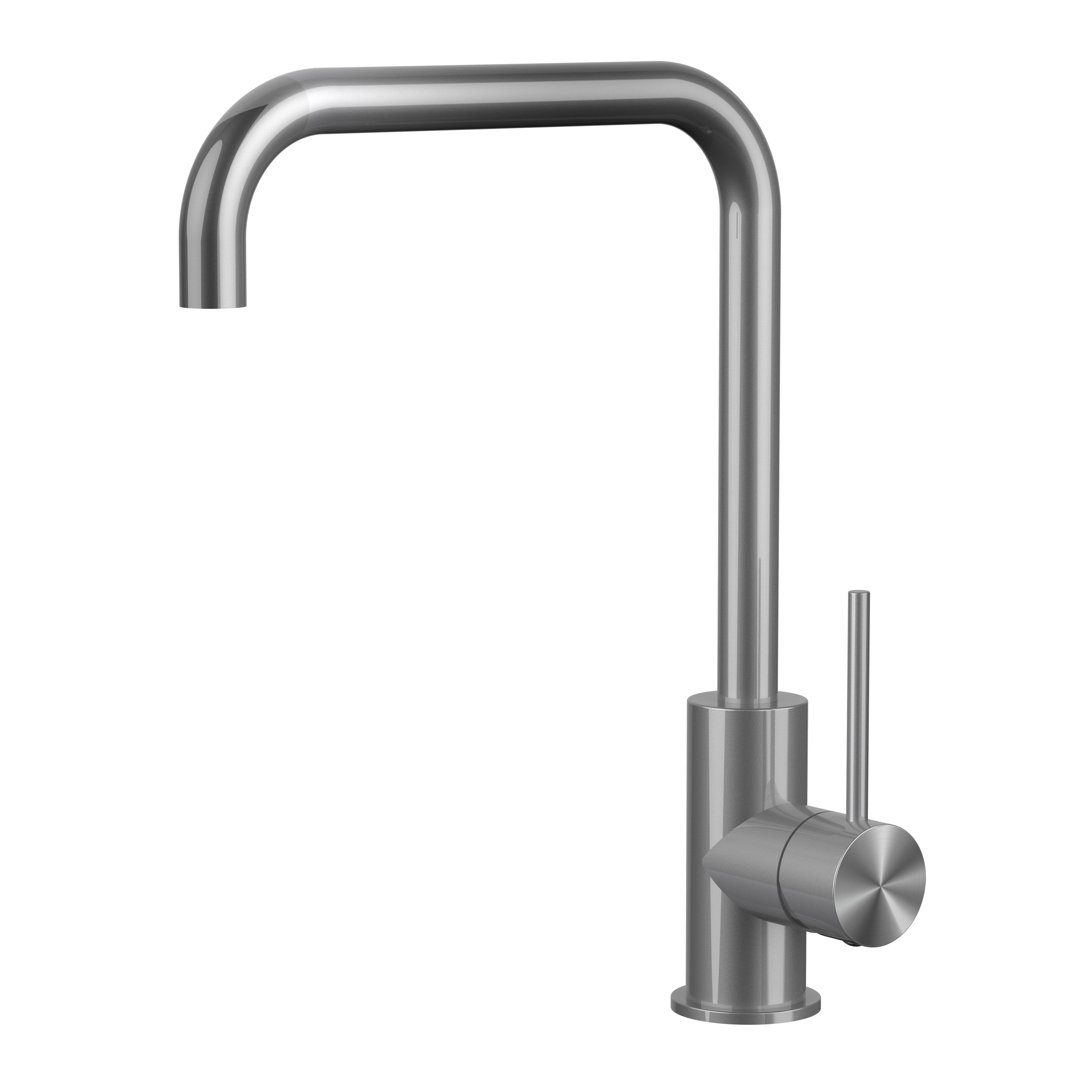
The bathroom is a brutal environment for metal. Constant moisture, steam, and chemical cleaners can eat away at inferior materials. This is where the battle between brass and stainless steel gets intense.
Brass is naturally resistant to "red rust" because it contains no iron. However, it can undergo "dezincification" or develop a green patina (verdigris) if the protective plating wears off. This is why the quality of the finish matters so much for a brass bathroom faucet. If the finish is high-quality, it will look new for twenty years. If it is cheap, it might tarnish.
Stainless steel is the king of corrosion resistance. It does not rust, chip, or fade easily. It handles "hard water" deposits better than almost any other material. For a waterfall style fixture where water sits on a flat surface, stainless steel is often the safer bet. It won't pit or corrode even if water pools on it frequently.
| Feature | Solid Brass | Stainless Steel (304/316) |
| Rust Resistance | Excellent (No iron) | Superior (Passive layer) |
| Durability | High (Heavy duty) | Very High (Scratch resistant) |
| Antimicrobial | Yes (Copper content) | No |
| Lead-Free | Needs Certification | Inherently Lead-Free |
Style often dictates the winner. If you want a specific finish, like matte black, both materials can accommodate it, but the application method differs.
Brass is incredibly versatile for casting. It can be molded into intricate shapes, making it perfect for a wall mounted vintage look or a complex pull out mechanism. Because it is easily plated, you can find brass fixtures in polished gold, brushed bronze, or vibrant nickel. If your bathroom design leans toward "luxury" or "classic," brass is your best friend.
Stainless steel usually comes in a brushed or polished finish. It looks clean, industrial, and sharp. It is the go-to material for a modern minimalist bathroom. While you can find a matte black stainless steel bathroom faucet, the natural silver-grey hue of the metal is its most popular form. It doesn't show water spots as easily as polished brass, which is a major win for busy households.
How much time do you want to spend cleaning your sink? This is a practical question that determines which metal is better for your lifestyle.
Stainless steel is remarkably low-maintenance. A quick wipe with a damp cloth usually removes most spots. It is highly resistant to the abrasive cleaners many people accidentally use in bathrooms. If you have a touchless faucet in a high-traffic guest bathroom, stainless steel will hold up against the constant use and frequent cleaning better than most plated metals.
Brass requires a bit more "respect." If you have a lacquered brass finish, you must avoid harsh chemicals that could strip the clear coat. For an unlacquered "living finish," the metal will change color over time, developing a dark, antique look. Many designers love this, but if you want it to stay shiny, you will be polishing it regularly. However, even with this maintenance, a high-quality brass bathroom faucet can easily last 50 years. The internal parts are usually more robust and easier to repair than those in cheaper steel models.
In the past, brass was criticized for containing small amounts of lead to make it easier to machine. Today, strict regulations ensure that any bathroom faucet sold in major markets is "lead-free" (containing less than 0.25% lead).
However, stainless steel is inherently lead-free. It does not require any additives to be machined effectively. For families who are extremely concerned about water purity—perhaps for a touchless faucet used by children—stainless steel provides ultimate peace of mind. It is the same material used in surgical instruments and commercial kitchens for a reason: it is inert and won't leach anything into your water.
When comparing costs, stainless steel often occupies the middle ground, while brass spans from "affordable" to "ultra-luxury."
A high-quality, solid brass bathroom faucet is an investment. You are paying for the weight of the metal and the complexity of the finish. However, be careful of "brass-finished" zinc. Many cheap faucets are made of zinc alloy and just colored to look like brass. These will fail in a few years. A true solid brass waterfall faucet will be expensive but will likely be the last one you ever buy.
Stainless steel offers incredible "bang for your buck." It provides high-end durability and a premium look at a price point that is often lower than solid brass. Because the material is so tough, the manufacturing process is more standardized, which keeps costs down. For a modern minimalist renovation on a budget, stainless steel delivers a luxury feel without the luxury price tag.
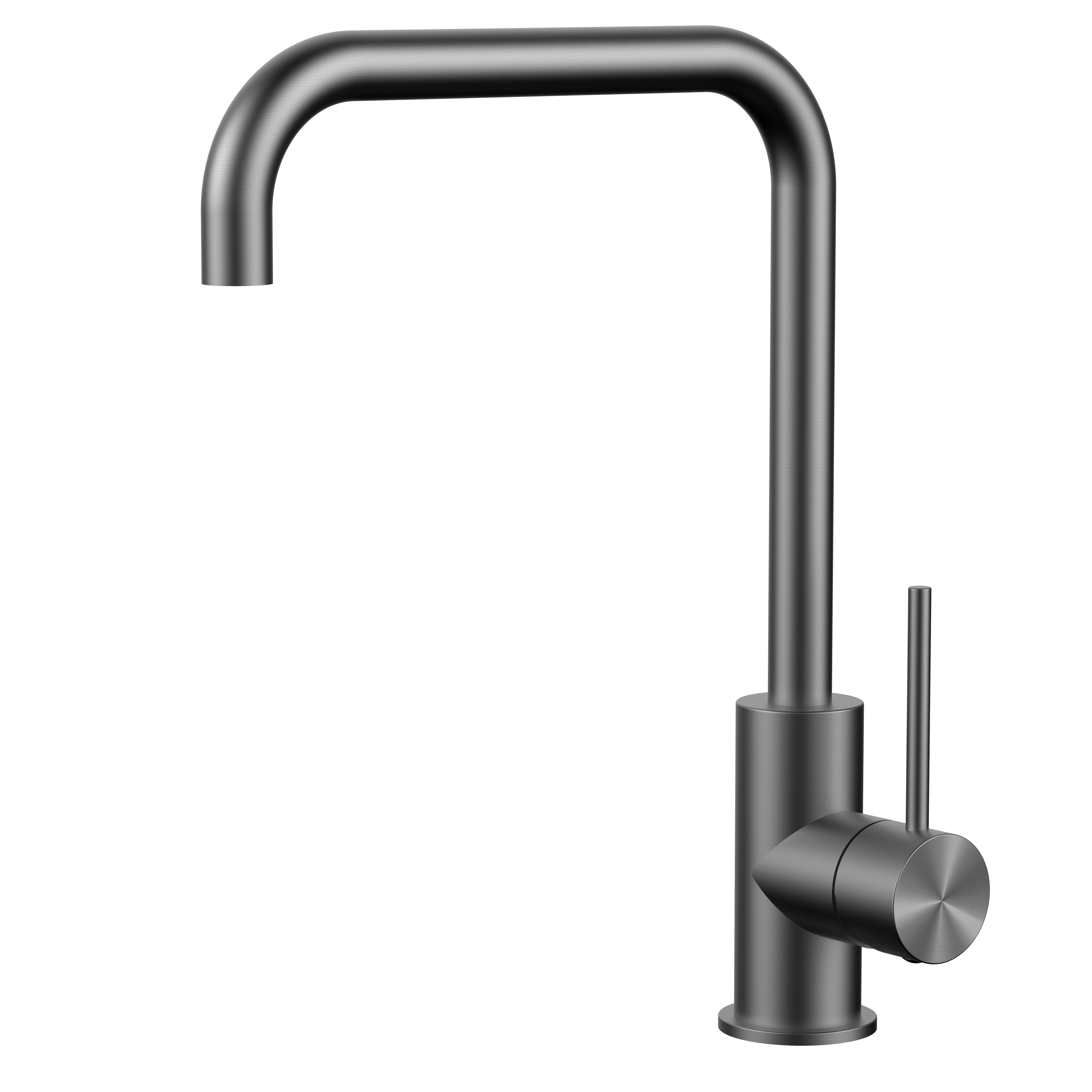
Beyond the metal itself, the material affects how the faucet functions over time. Let's look at how these metals support specific features like pull out sprays or touchless sensors.
Brass is an excellent "bearing" metal. This means that moving parts inside a pull out faucet handle slide against brass with very little friction. This results in a smoother "feel" when you turn the water on or adjust the temperature.
Stainless steel can be machined to very tight tolerances. This is vital for touchless faucets where sensors and solenoid valves need to fit perfectly within the housing. A modern minimalist stainless steel faucet often feels very precise and "tight" in its construction.
Pull out faucets: Brass is preferred for the internal hose connections due to its flexibility and strength under pressure.
Wall mounted fixtures: Brass is often better here because it can be cast into a single, leak-proof solid body that sits behind the wall.
Waterfall designs: Stainless steel's resistance to standing water makes it ideal for the flat "open" spouts where water might linger.
If you care about the planet, both metals have strong credentials, but one has a slight edge.
Brass is highly recyclable. Most brass used in plumbing today is made from recycled scrap copper and zinc. Because it lasts so long, it doesn't end up in landfills frequently.
Stainless steel is the ultimate green metal. It is 100% recyclable and is usually produced in a way that minimizes waste. It requires no toxic plating processes (like chrome or nickel plating), which can be harmful to the environment. If you choose a raw brushed stainless steel bathroom faucet, you are choosing a product with a very low environmental footprint. It is a win for your home and the earth.
Is brass or stainless steel better for bathrooms?
Choose Brass if: You want a heavy, high-end feel, a wide variety of finishes like gold or bronze, and you appreciate the antimicrobial properties of copper. It is the gold standard for wall mounted and luxury designs.
Choose Stainless Steel if: You want a modern minimalist look, superior resistance to hard water and scratches, and an inherently lead-free material. It is the practical, durable choice for a high-traffic bathroom faucet.
Both materials will serve you well if you buy quality. Avoid cheap alloys and look for "solid brass" or "304 stainless steel" to ensure your bathroom stays beautiful for years to come.
Q: Does stainless steel rust in the bathroom?
A: High-grade 304 or 316 stainless steel will not rust under normal bathroom conditions. It is much more resistant to corrosion than almost any other metal.
Q: Is brass more expensive than stainless steel?
A: Generally, yes. Solid brass is more expensive to source and cast than stainless steel. However, stainless steel can still be pricey depending on the brand and technology, like touchless features.
Q: Can I get a matte black finish on both?
A: Yes! You can find a matte black bathroom faucet in both brass and stainless steel. In both cases, the finish is usually a PVD (Physical Vapor Deposition) coating or powder coating.
Q: Which is better for hard water?
A: Stainless steel is typically better for hard water. It is less likely to pit or develop surface damage from mineral buildup compared to the plated finishes often found on brass.
We operate a premier manufacturing facility dedicated to crafting high-performance bathroom solutions for the global B2B market. With years of experience in precision engineering, we specialize in both solid brass and premium stainless steel fixtures. Our factory is equipped with advanced CNC machining and eco-friendly PVD coating lines, allowing us to produce everything from modern minimalist matte black faucets to sophisticated touchless systems. We understand the rigorous demands of hotel projects and large-scale developments. Our strength lies in our ability to provide custom OEM/ODM services while maintaining strict quality control that exceeds international standards. We invite wholesalers and project managers to leverage our robust supply chain and technical expertise to bring superior durability and style to their next project.


